Spanish citizenship
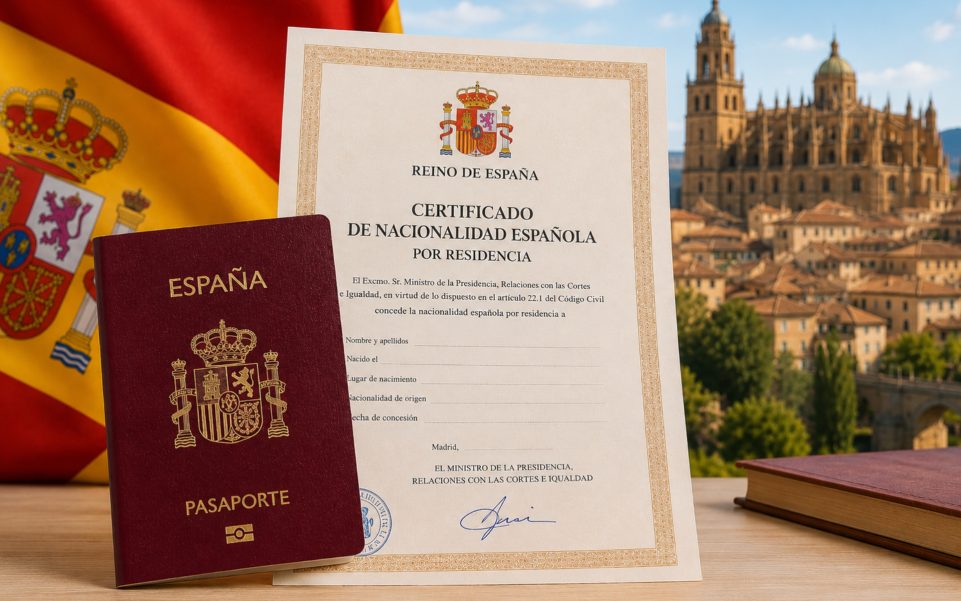
Spanish citizenship provides everything you need for a comfortable, secure and safe life in a developed European country. You will be able to do business, work and travel throughout the European Union without restrictions. You will have full access to social security programmes, high-quality healthcare and education for your children. You will be able to plan for the future, participate in public life and enjoy your leisure time in comfort. Immigration requirements here are more lenient, and there are legal tools available for legitimate tax optimisation.
The standard conditions for obtaining Spanish citizenship follow a typical route — via a residence permit and permanent residence. After moving to the country and obtaining a residence permit, you will be able to obtain a passport after 10–12 years. The legislation provides for fast-track immigration routes for residents of certain countries or where there are sufficient grounds — for example, through marriage.
Advantages of Spanish citizenship
There are several ways to legalise permanent residence in the country. The most common is a standard residence permit. A residence permit allows you to live in the country, but imposes certain restrictions.
Spanish citizenship following permanent residence is suitable for those planning long-term residence and integration into society. This route takes longer and requires meeting a number of conditions, but offers greater stability and expands the opportunities available.
Advantages of Spanish citizenship:
- no need to renew your residence permit or confirm the legality of your grounds for staying in the country;
- freedom of movement within the European Union — you can live, work and run a business in any EU country without additional permits;
- unrestricted access to the labour market;
- full social security benefits, the right to participate in state support and protection programmes, receive a pension and access healthcare;
- education at state or private educational institutions;
- participation in community life and the right to vote.
Once you have obtained a Spanish passport, your rights and opportunities will be unrestricted. Legally, your status is no different from that of native Spaniards.
How to obtain Spanish citizenship
The standard and most common route is through naturalisation. Immigration law provides for other routes as well. However, these are subject to a number of restrictions and are aimed at a relatively narrow group of foreign nationals.
Options and conditions for obtaining Spanish citizenship:
|
Immigration route |
Main conditions |
Notes, special features |
|
Naturalisation |
|
|
|
Marriage to a Spanish citizen |
|
|
|
By descent (by right of blood, jus sanguinis) |
|
|
|
Adoption, guardianship |
|
|
| Special merits |
|
|
|
By birth (jus soli) |
|
|
Basic requirements for obtaining Spanish citizenship
The requirements for expats are broadly in line with those in the European Union. They are challenging but achievable, and there are no artificial restrictions. If, after moving, you have attended language courses, actively familiarised yourself with the country’s culture and traditions, participated in community life, and paid your taxes on time and in full, the likelihood of your application being refused is significantly reduced.
Key requirements:
- legal residence under a residence permit for at least 10 years; reduced periods apply for citizens of certain countries and holders of specific types of residence permits;
- no serious criminal offences in Spain or other countries;
- documentary evidence of sufficient integration — knowledge of the country’s history, culture and traditions, the fundamentals of its political system and the specifics of its legislation; the candidate’s actual level is assessed by the Instituto Cervantes through the DELE and CCSE exams;
- financial and social stability — proof of a steady income and employment is required;
- valid registration confirming a permanent place of residence;
- the standard set of documents.
If all requirements and conditions are met, you will be able to obtain a Spanish passport without encountering significant difficulties or problems.
Application process
Obtaining Spanish citizenship after permanent residence is a more complex and lengthy process compared to applying for a residence permit. Therefore, preparation for the procedure is essential; you must ensure that all legal requirements are met. Difficulties may arise with gathering documents or taking the DELE and CCSE exams. Make sure you are ready to submit your application, and only then proceed.
Steps to obtaining Spanish citizenship:
- Preparing documents. The basic set includes a copy of your residence permit or proof of your legal status, a certificate of no criminal record, a birth certificate, a bank statement or other proof of financial status, as well as DELE and CCSE certificates, though these are not always required.
- Submitting the application. The easiest way to do this is online via the Ministry of Justice (Ministerio de Justicia) portal or authorised services.
- Application processing. The decision-making process may take some time. Immigration legislation does not specify exact timeframes, so you should expect a wait of 1–2 years, and sometimes up to 3 years. At this stage, additional documents, certificates or explanations may be requested.
- Registration with the Civil Registry (Registro Civil). This stage is largely a formality; in practice, it amounts to the legal formalisation of the approval previously received. You take an oath, after which your Spanish citizenship is officially registered.
- Document processing. The final stage, during which you are issued with a Spanish passport and a standard DNI (Documento Nacional de Identidad) identity card, in the form of a plastic card.
Dual citizenship
A complex and important issue for many expats, especially if they view a Spanish passport as a strategic element of protection. Legally, the situation is clear and straightforward. The oath-taking procedure typically requires you to renounce your existing citizenship. Exceptions apply to Latin American countries, Portugal, Andorra, the Philippines and Equatorial Guinea.
The situation then depends on the laws of the country you have come from. A formal renunciation of your previous citizenship does not always automatically lead to its actual loss. In other words, you may be considered a citizen of another state, retaining the corresponding rights and obligations.
You must not conceal your actual status from the Spanish immigration authorities — this is a serious breach of the law. When completing documents, you must provide accurate information about your citizenship status. The legal consequences in another country are governed exclusively by that country’s national legislation.
How much does it cost to obtain Spanish citizenship?
The total official costs depend on whether you need to sit two exams – the CCSE and the DELE – as well as the country you are from. The minimum fee required of everyone is the state fee for submitting Form 790-026 — €105. If you are not exempt from taking the exams, you will need to pay €85 for the CCSE and a further €130–€160 for the DELE A2.
The second part of the costs is effectively necessary for all expats, but is not formally mandatory:
- apostille, translations, legalisation of documents — €20–€80 per document;
- certificates of good conduct, birth certificates, etc. from your home country — costs vary; such services may be free;
- notary services — around €100;
- Spanish passport following approval of citizenship — €30;
- DNI (ID card) — a small fixed fee of €12.
Total minimum costs — around €400–€600.
You can request detailed information on obtaining Spanish citizenship tailored to your specific situation from our specialists.
FAQs about Spanish citizenship
How long does the process take?
On average, between one and a half and three years. The longest stage is the consideration of your application by the Ministry of Justice, which can take up to two years.
Is it possible to obtain citizenship without knowing Spanish?
Immigration laws require you to pass the DELE A2 language test when applying for citizenship. Exceptions are possible in a few cases: holding a degree obtained in Spanish, documents confirming a sufficient level of language proficiency, or other grounds provided for by law.
What reduced residence periods apply to citizens of Latin America?
For them, a reduced period of continuous and legal residence in Spain applies — 2 years instead of 10 years. Other requirements regarding the DELE and CCSE exams, a clean criminal record, and proof of financial solvency/sufficient income remain in force.
Is it possible to retain previous citizenships?
In most cases, no. The law stipulates that upon receiving a Spanish passport, when the applicant takes the oath, they must renounce their previous citizenship. Exceptions are provided for Latin American countries, Portugal, Andorra, the Philippines and Equatorial Guinea.