Immigration to Spain
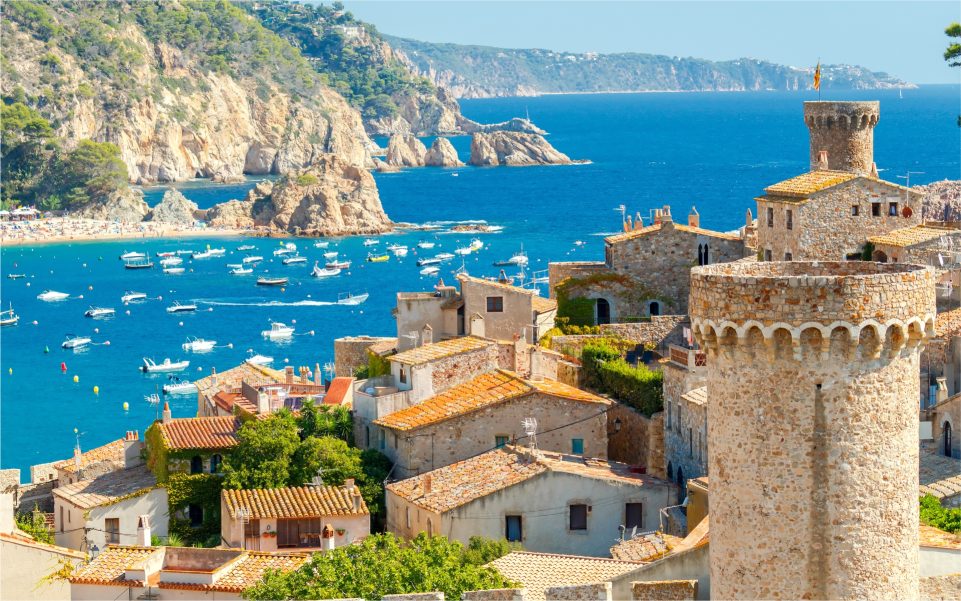
When choosing a country to move to for permanent residence, a standard set of criteria is often used. Basic requirements usually include a mild climate, a decent standard of living, high salaries, job availability, personal safety, and relatively straightforward administrative procedures. Immigration to Spain is a destination that meets all these conditions. It is a very welcoming country for foreigners, and organising a move there is entirely feasible.
Moving to Spain is often chosen by families with children, pensioners, young professionals, students, freelancers, digital nomads, businesspeople and investors. The reasons why you are interested in the country may vary, but in any case, you will not regret your choice. The most important thing is to do everything possible to avoid mistakes and disappointments. Moving to Spain legally is a project that requires preparation. But it is entirely achievable, and that is the most important thing.
Why Spain in particular
There are quite a few countries in Europe where comfortable conditions have been created for foreigners to move to. Typical examples include Portugal, Italy, Montenegro, Cyprus and Greece. Switzerland and the Scandinavian countries have slightly higher entry requirements, albeit with the same or even better conditions. However, emigration to Spain remains a popular choice for foreigners for whom comfort in all aspects of life is particularly important.
Reasons for moving:
- A stable economy. A developed market with a focus on the social sphere — a rare but very good combination. The absolute level of wages in Spain is not as high as in some other countries. However, prices for basic goods and services are lower, the labour market is well-developed, and it is easier to find a suitable job.
- Climate and environment. The country enjoys many sunny days and offers easy access to the sea. The air is clean and the water in the rivers is clear. All EU environmental standards are met.
- A socially oriented economy. You can move to Spain and gain access to high-quality education, healthcare and state social support programmes. This is particularly important for pensioners and families with children.
- Social, economic and financial stability. Immigrating to Spain does not involve the risk of unpredictable negative changes. The established model of governance and decision-making is geared towards maintaining order in all areas of life, so you can plan for the future with confidence and raise your children.
Options for moving to Spain
The complexity of the process depends on the country you are coming from. For EU/EFTA (European Free Trade Association) citizens, a simplified procedure applies. After moving, they must register at their actual place of residence if their stay exceeds 90 days.
For citizens of other countries, standard routes for emigration to Spain are provided:
| Visa type | Main conditions for obtaining | Validity | Advantages, features |
| Work visa (Visado de trabajo por cuenta ajena) |
|
1 year, renewable if employment continues |
|
| Visa for entrepreneurs and the self-employed (Autorización de residencia y trabajo por cuenta propia) |
|
1 year, renewable for 2 years |
|
| Student visa (Visado de estancia por estudios) |
|
Valid for the duration of the course — 1 year, with subsequent renewals |
|
| Residence permit for wealthy individuals (Residencia no lucrativa) |
|
1 year, renewals — 2 years |
|
| Digital nomad visa (Visado para teletrabajo / nómada digital) |
|
From 1 year + renewal |
|
| Family reunification (Residence permit for family reunification) |
|
1 year, renewable |
|
| Visa for skilled workers |
|
1–2 years, renewable |
|
Long-term residence in Spain
A residence permit here is called a Residencia temporal; it is linked to a visa, has a limited validity period and requires regular renewal. A long-term residence permit (Residencia de larga duración) offers a higher level of comfort.
Comparison of temporary and permanent residence permits:
| Criterion | Spanish temporary residence permit | Permanent residence in Spain |
| Validity | Limited | No time limit, but the TIE card must be renewed |
| Renewal | Mandatory | Not required; the TIE must be renewed approximately every 5 years |
| Right to work and/or conduct business | Depends on the type of visa | Unrestricted |
| Path to citizenship | 5–10 years of residence in Spain | After obtaining permanent residence, you can apply for citizenship after 1–5 years |
| Stability | Low | High; substantial grounds are required for the revocation or cancellation of permanent residence |
| Requirements | Depend on the type of Spanish residence permit | Not as strict as for a residence permit; at least 5 years of legal residence in Spain; compliance with a number of rules |
How to move to Spain and obtain citizenship
The standard and relatively universal route, applicable in most cases, consists of three stages. The first and most important stage is obtaining a residence permit. A residence permit allows you to lead a full life in Spain without significant restrictions and to plan your future steps with confidence.
Permanent residence offers more opportunities, and the restrictions are less stringent compared to a residence permit. The main requirements are standard: at least five years with residence permit status, a stable source of income and/or sufficient financial reserves, and social and legal integration into society. Some foreign nationals require health insurance — for example, the self-employed and pensioners.
The final stage is applying for citizenship. You will need to demonstrate language proficiency (minimum DELE A2 level) as well as solid cultural integration into Spanish society. The timeframe depends on your country of residence; it usually takes at least 10 years to complete all three stages. Citizens of EU/EFTA countries are in a better position, as they are subject to more lenient conditions.
Ways to obtain Spanish citizenship:
| Immigration route | Key requirements | Minimum residence period | Notes |
| Through legal residence in the country |
|
Standard period — 10 years; for residents of certain countries — 2 years and 5 years | The most common 3-stage option — residence permit, permanent residence, citizenship |
| By descent (jus sanguinis) |
|
Not required; citizenship is granted automatically or upon application | There are nuances and special cases |
| Through marriage to a Spanish citizen |
|
At least 1 year | Marriage and cohabitation require documentary evidence |
| Through descent from Spanish grandparents |
|
Depends on the programme | There are restrictions and specific conditions |
| By birth (jus soli) |
|
At birth | Decisions are made on a case-by-case basis |
| For exceptional merits |
|
On a case-by-case basis | Exceptional circumstances; the decision is taken at government level |
Submission of documents
Moving to live in Spain is somewhat easier than moving to Switzerland, Germany or Italy. In these countries, not only are the requirements for potential candidates stricter, but the level of bureaucracy is also higher.
What documents are required to move to Spain:
- Residence permit (Residencia temporal). You will need a passport, a standard application form (Form EX), passport photos, proof of the purpose of your visit, financial guarantees, valid health insurance and two certificates — one confirming no criminal record and one regarding your state of health. Documents are usually submitted to the consulate in your country of residence, then, after arrival, to the immigration office (Oficina de Extranjería). The typical waiting time for a decision is 1–3 months. If the decision is positive, it takes a further 2–6 weeks to process the TIE.
- Long-term residence (Residencia de larga duración). Form EX-11, international passport, TIE, proof of residence in the country for at least 5 years, proof of income or a certificate of employment, payment of the state fee. A certificate of no criminal record may also be requested. Documents must be submitted via the immigration office. The application processing time is no more than 3 months.
- Citizenship. The list of documents is practically the same as for permanent residence. A significant difference is the requirement for exam certificates – DELE A2 and CCSE – as well as proof of registration at the place of residence (Empadronamiento). Submit documents via the Ministry of Justice’s online portal, Sede Electrónica del Ministerio de Justicia, or in person at the Registro Civil (equivalent to the Registry Office). You will have to wait up to 2 years for a decision.
Steps to take after moving to Spain
The legal grounds for obtaining a residence permit may vary. Some of these are mandatory for all expats, whilst others address issues concerning integration into society that can be challenging for foreigners.
What you need to do after moving to Spain:
- register with the local council (Ayuntamiento) and confirm your address;
- obtain a TIE residence card from the police (Policía Nacional);
- register with the health service and/or take out insurance — either state or private;
- open a personal bank account;
- obtain an NIE (Número de Identidad de Extranjero, Foreigner’s Identification Number), which is usually issued together with a visa or residence permit;
- sort out practical matters — buy and activate a SIM card, rent accommodation, and set up utility services.
How much does it cost to move to Spain? Basic expenses include visa/residence permit processing, renting accommodation, the move itself, initial living costs and a minimum financial buffer. The total cost starts from €3,000 per person, but this varies greatly from person to person. It is important to remember that when immigrating to Spain, you often need to provide documentary proof of your income; a bank statement or payslip is best suited for this purpose.
You can always obtain further information on this topic from our specialists.
FAQs immigration to Spain
How long do you need to live in Spain to obtain permanent residence?
At least 5 years. You cannot leave the country for long periods — usually no more than 10 months over 5 years. An additional condition is that you must have no serious criminal offences and hold a valid residence permit at the time of applying for permanent residence.
Can I apply for citizenship without a permanent residence permit?
Yes. There are no formal requirements stipulating that a citizenship applicant must hold a residence permit; the main condition is legal residence in Spain for at least 10 years. However, permanent residence reduces the risk of status revocation, simplifies life and makes it more stable.
What is the minimum income required for a non-lucrative visa?
Financial requirements are calculated based on the IPREM index. The main applicant must prove an income or savings of at least 400% of the IPREM (around €2,400 per month), with an additional 100% of the IPREM for each family member. Annually, this amounts to approximately €28,800–33,600, depending on the calculation method. Proof can be provided either through regular income or savings in a bank account, and the amount must cover at least one year’s residence.
Can I bring my family on a digital nomad visa?
Yes, but compliance with the financial requirements is mandatory. You can include your husband or wife, children — whether minors or adults but financially dependent — and, in some situations, parents in your application. The minimum financial requirements are 200% of the IPREM for yourself + 75% of the IPREM for your husband/wife + 25% of the IPREM for all others. Your total verified income must meet the standard conditions, be stable and remote — not from a Spanish source.