Moving to Spain
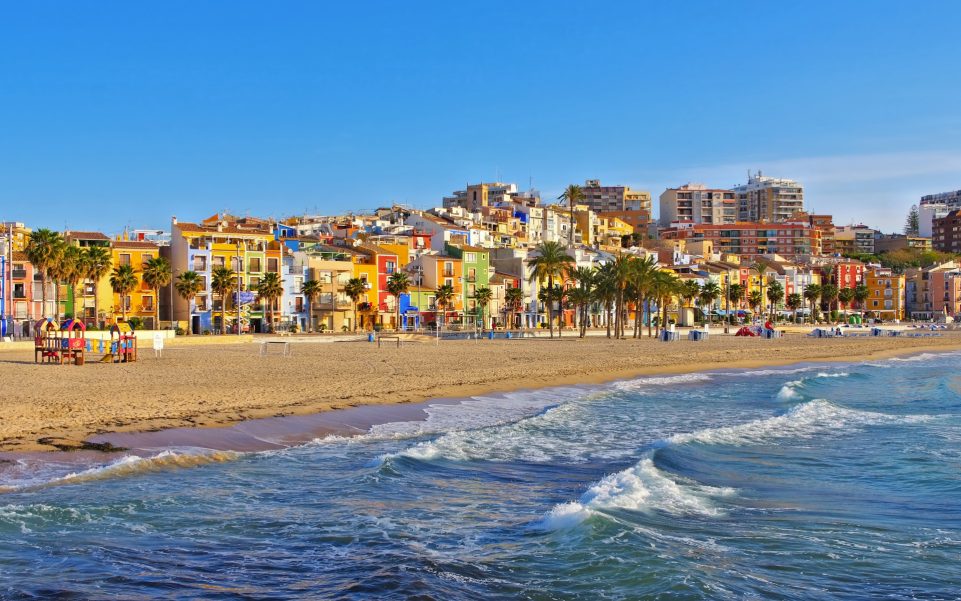
Moving to Spain rarely begins with packing your suitcases and buying tickets. Such a project requires careful preparation, studying the intricacies of immigration law, calculating tax payments, and finding accommodation and work. But these necessary hassles are a prerequisite for success. Once you have gone through all these stages, you will understand why life in Spain is so attractive, convenient and comfortable for foreigners.
Don’t be afraid of the difficulties — they can be overcome. Immigrating to Spain does not usually involve the problems that arise when choosing Switzerland, Canada, Norway or Singapore. You can choose from several viable immigration routes. The requirements and likelihood of approval depend on the specific grounds and the quality of the documentation. An example is the digital nomad visa.
A residence permit in Spain offers a personal and highly comfortable introduction to the country, beyond the usual tourist routes. The climate is mild, the locals are welcoming towards foreigners, and the cuisine is excellent. The cost of living in Spain is lower than in neighbouring countries, the people are open-minded, and there are effective social welfare programmes in place.
Therefore, a project involving relocation for long-term or permanent residence may be of interest to digital nomads, pensioners, businesspeople and skilled professionals. A residence permit in Spain is often chosen by families with children, as life here is not just comfortable, but secure and safe.
The tax burden is not the lowest, though in Europe it is often even higher — in the Nordic countries and Switzerland. However, this is often offset by special preferential schemes, and it is also possible to choose an autonomous region where the tax burden is lower. Immigration policy does not impose strict restrictions; the requirements for moving to Spain, including financial ones, are relatively lenient.
Immigration routes
There are various ways to move to Spain. Your choice should be based on your circumstances and objectives. If you are interested in obtaining permanent residence in Spain and, eventually, citizenship, this is a complex but achievable task. The situation is quite different when the priority is long-term residence in the country for the purpose of working, running a business, or launching and supporting an investment project. You need to plan the process of obtaining a residence permit in Spain based on your specific circumstances; general advice and recommendations usually overlook important nuances and details that often prove decisive.
Possible immigration routes:
- Employment. Suitable mainly for qualified specialists in certain fields. An invitation from an employer and their willingness to take active steps are required.
- Freelance work, remote work. It is possible to obtain a residence permit in Spain legally as a digital nomad, which is a major advantage. Benefits include no requirement for a local contract and relatively low taxation.
- Investment, business. Following the abolition of the ‘Golden Visa’ in 2025, this route remains, but the current rules have changed. The main condition is that the project must be viable, not merely formal, and beneficial to the economy.
- Study. This option is suitable for those planning to study at colleges, universities, on specialised courses or take part in exchange programmes. Obtaining a residence permit in Spain is easier, but converting it into a residence permit or permanent residence is not always straightforward and involves meeting a number of conditions.
- Family, marriage. Another popular route for relocation. An important restriction is the active crackdown on sham relationships.
- People aged 50+ with a stable income. Foreign nationals with a confirmed passive income may consider the residencia no lucrativa if they do not plan to work or carry out professional activities in Spain.
Visa options
The conditions for moving to Spain depend on the type of entry permit. Each has its own restrictions and specific requirements, so you need to choose carefully during the planning stage. The option that suits you best may actually be unavailable or difficult to obtain.
How to choose a visa and move to Spain:
- Work visa (Residencia por trabajo). You will need an official contract with a Spanish company or employer. This visa is primarily aimed at skilled professionals in shortage occupations.
- Digital nomad visa (Visa para nómadas digitales). A convenient and relatively straightforward entry permit to obtain. Issued for 1 year, with the possibility of renewal. You must have health insurance and provide documentary evidence of sufficient income.
- Student visa (Visa de estudios). This residence permit is issued to students at universities, colleges and on courses. Part-time work is permitted. The main drawback is its limited validity period. After completing your studies, permanent residence in Spain is only possible by changing your immigration status, which involves certain difficulties.
- Family Reunification Visa (Reagrupación familiar). Due to its limited applicability, this option can hardly be called universal. Another potential drawback is the financial requirements for the family member who will sponsor you in the country. However, if the basic conditions are met in your case, moving to Spain will be fairly straightforward.
- Retirement visa (Residencia no lucrativa). This residence permit is aimed not only at those aged 50 and over, but also at foreigners with a sufficiently high passive income. This type of residence permit in Spain excludes the possibility of paid employment or running a business.
The investor visa, often referred to as the ‘Golden Visa’ (Visa de inversores), was abolished in 2025. Consequently, there is no longer a direct route to Spanish citizenship in exchange for investments in business, funds or property. High-income foreigners can choose one of the alternative options — a retiree visa or a digital nomad visa.
Taxation in Spain
The tax burden on individuals and companies, unless special preferential regimes apply, may seem quite high. When considering moving to Spain for permanent residence, tax payments are often cited as a drawback. But this approach is mistaken. The country has progressive tax rates, so at lower income levels, tax payments will not be as high.
The second factor is special tax regimes:
- The Beckham Law. This allows you to opt for a flat personal income tax rate of 24% instead of the progressive scale ranging from 19% to 47% on income earned in Spain itself. It is valid for 6 years from the date of moving to the country. To qualify for the relief, a number of conditions must be met.
- Regional benefits for new residents. These offer reductions in certain tax rates. Eligibility is limited to specific autonomous communities — for example, Catalonia, Madrid and Valencia.
- Benefits for new businesses. In Spain, newly established companies benefit from a reduced corporation tax rate of 15% instead of the standard 25% during the first years of profitable operation. Regional subsidies and support programmes may also be available.
Tax residency in Spain is determined on the basis of any two of the following criteria. The first is permanent residence in the country for more than 183 days a year. The second is having the centre of one’s vital interests in Spain. If you have a family, major assets, permanent employment or a business here, you will be considered a tax resident.
Features of the Spanish tax system:
| Tax | Spanish residents | Non-residents of Spain |
Notes |
|
Income tax |
Progressive scale, from 19% to 47% | 19% — EU/EEA nationals, 24% — all others |
Residents include all income in their taxable base; non-residents include only that part of their income received in Spain |
|
Social security contributions |
6.35% – employee + 30% – employer | Paid where there is an employment relationship in Spain |
Funds pensions, the healthcare system and social assistance |
|
VAT |
21%, reduced rates available — 4%, 10% | Similarly |
Indirectly paid by all purchasers/consumers of goods and services |
|
On property |
From 0.2% to 1.1% of the cadastral value | Similarly |
Rates are set at local authority level |
|
On capital gains |
Part of IRPF, 19%–28% | Part of IRNR, usually 19% for the EU/EEA, 24% for others |
The basis for calculation is the difference between the purchase price and the sale price of the asset; a municipal tax may also apply on the sale of property |
|
Corporate income tax |
25% | Only if a legal entity is registered in Spain |
Small business relief may be available |
Life in Spain
Immediately after moving to the country, you will need to address several important matters. The main ones are housing and work. You will need to familiarise yourself with the intricacies of calculating utility bills, the cost of goods and services, taking out health insurance, learning the language, and finding a nursery or school for your children.
The cost of living in Spain is not the highest in the European Union, but typical expenses vary greatly depending on the city and your standard of living:
- rent — from €500 to €1,500; flats and houses in smaller towns and rural areas are cheaper;
- utility bills — from €80 to €150;
- internet and mobile phone bills — from €30 to €60;
- food — from €200 to €350;
- public transport — from €40 to €60;
- health insurance — from €50 to €150;
- entertainment and other expenses — from €100 to €300.
Parents can expect additional costs. The cost of education for children in Spain depends on the type of institution; state schools are usually free, whilst private ones can be expensive. For example, monthly fees for nursery school range from €200 to €600; school fees are free (municipal), or up to €1,500 for private or international schools, and sometimes higher.
An annual course at a state university costs between €700 and €3,500; at a private university, between €5,000 and €20,000; and a master’s degree or MBA, between €2,000 and €30,000. Immediately after immigrating to Spain, many foreigners enrol in language courses; this significantly speeds up their integration into society and improves their chances of finding work. Approximate cost: €100 to €400 per month.
Work in Spain for foreigners
The job market is dynamic, and there are always vacancies. However, interesting and promising opportunities are less common. Knowledge of the language is practically a prerequisite for employment, especially if you are aiming for a high salary.
How to find a job in Spain:
- specialised online platforms — InfoJobs, Indeed, LinkedIn;
- websites of large companies;
- recruitment agencies;
- personal contacts and recommendations from acquaintances;
- local online resources and groups aimed at foreigners.
Moving to Spain without a job is possible, but subject to certain conditions. You must be a student at one of the local universities, prove that you have passive income, or confirm your status as a freelancer or digital nomad. When issuing a visa or residence permit, the applicant’s financial standing is checked. If an immigration officer cannot find the necessary documentary evidence, a refusal is almost guaranteed.
Accommodation in Spain for foreigners
The main factors affecting the price are the town (or neighbourhood), the general condition of the property, and whether it is furnished and/or equipped with white goods. The standard option, which is most often chosen by foreigners, is a long-term lease; this is the largest item in monthly expenses. Transactions are conducted officially only; costs will be higher in major cities and on the coast. Therefore, if you are looking for affordable rental accommodation in Spain, it is better to choose smaller towns or rural areas.
Approximate monthly rental prices:
- studio or one-bedroom flat — from €500 to €1,500;
- 2-bedroom flat — from €600 to €1,800;
- 3-bedroom flat — from €700 to €2,500;
- detached house in a small town — from €700 to €1,000;
- detached house in a prestigious area of a major city — from €1,500 to €2,500.
A tenancy agreement must always be in writing; a verbal agreement is not legally valid. The standard term is one year; this is particularly important for those seeking a residence permit in Spain, as it allows you to demonstrate the seriousness of your intentions, open a bank account and secure a good job. The initial deposit is usually paid for 2 months’ rent. After moving out, if the landlord has no complaints about the tenants, the money will be refunded. Rent payments are most often made via bank transfer; cash payments are rarely used. Utility bills are paid by agreement; this point must be clarified before signing the documents.
The processing time for a residence permit in Spain is 2–4 months, including document preparation and waiting for a decision from the visa department or consulate. The likelihood of refusal is lower than in many other developed European countries, but it increases significantly if basic immigration rules are breached.
The best cities in Spain to live in are Madrid, Barcelona, Valencia, Seville and Malaga. When choosing, consider the climate, the established pace of life, average prices and the cost of renting accommodation. If you need to optimise your budget, you might consider smaller towns or villages, many of which offer a high standard of living. If you have no significant financial constraints, buying property in Spain can be a sound investment, but such a project requires careful planning.
If you have any further questions about moving to Spain for permanent residence, please contact us in any way that suits you.
FAQs about moving to Spain
How much money do you need to live in Spain?
The minimum amount depends on your preferences, comfort requirements and the town where you live. On average, €1,200–€2,500 per month is sufficient for one adult, whilst €2,000–€5,000 per month will be enough for a family of 3–4 people.
Is it possible to move there without knowing Spanish?
It depends on your goals and lifestyle. It is difficult to work and run a business without knowing Spanish, but in some sectors this is possible, for example, in IT. Studying is possible if the course is taught in English. In major cities, Spanish is not a prerequisite for everyday life either, but it will speed up and simplify your integration into society. If you have children, the language issue will be particularly acute, as international schools are significantly more expensive.
How do you obtain permanent residence and citizenship?
A permanent residence permit (Permiso de residencia permanente / Residencia de larga duración) can usually be obtained after 5 years of legal residence in Spain, provided you hold a temporary residence permit. You must meet a number of conditions relating to permanent employment, sources of income and compliance with the law. You can apply for citizenship after 10 years of living in Spain; for residents of certain countries, the waiting period will be shorter. You must have a good command of the Spanish language, be familiar with the culture and traditions, and pay your taxes on time and in full.
Is it possible to work remotely on a non-lucrative visa?
No. A non-lucrative visa (Residencia no lucrativa) is a special visa for pensioners and wealthy individuals with a sufficient level of passive income. Typical examples include pension payments, annuities and investments. Holders of such a visa are not permitted to work in Spain or run a business there.