Portuguese citizenship: requirements, processing times and application procedure
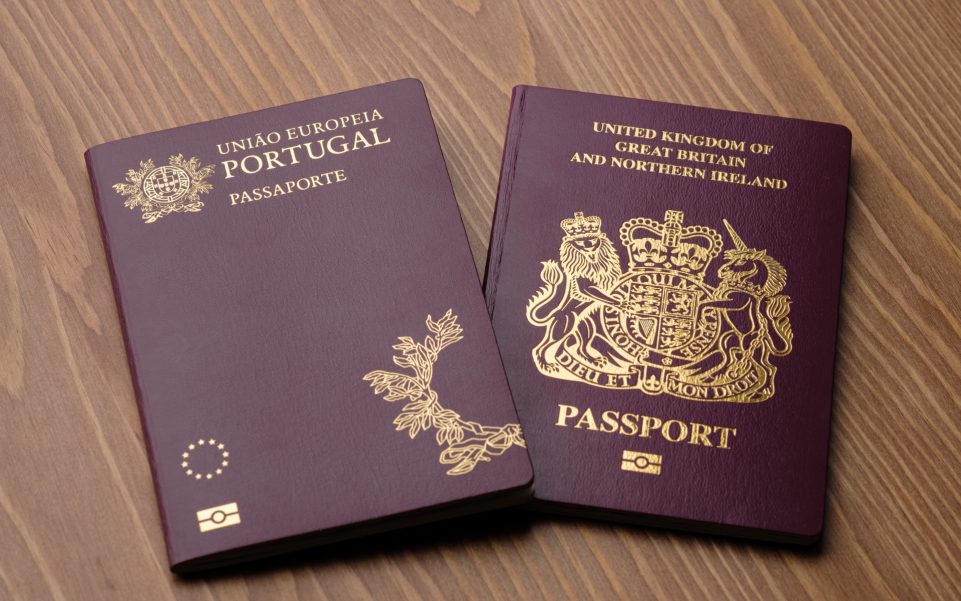
Portuguese citizenship entitles you to live, work and run a business permanently without any restrictions. You will be able to travel throughout the European Union, access state social programmes, participate in decision-making, and vote and stand for election.
To apply for a Portuguese passport, you must meet the minimum residence requirement. For EU citizens and nationals of Portuguese-speaking countries, this is at least 7 years; in all other cases, it is 10 years. Other mandatory requirements include integration into society, knowledge of the language, culture and traditions, and no serious criminal offences. The assessment of eligibility for Portuguese citizenship is more thorough than when applying for a residence permit or permanent residency. However, the procedure itself is largely independent of the chosen immigration route. This may include work, study, business, investment, family reunification or other factors.
Obtaining Portuguese citizenship via a residence permit or permanent residence requires strict compliance with all immigration legislation. However, the current rules remain clear and transparent, and refusals are usually due to insufficient preparation or an incomplete set of documents.
What a Portuguese passport offers
The main advantage is stability and predictability. If you wish to build your future in Portugal, this immigration route is preferable. However, obtaining permanent residency or citizenship is not a mandatory step. If the existing restrictions are not particularly critical for you, in most cases you can live and work in the country on the basis of a temporary residence permit.
Advantages of Portuguese citizenship:
- no need to renew or confirm your residence permit or permanent residency status;
- travel to EU countries without immigration formalities and with minimal restrictions on work and business activities;
- Portuguese citizenship is inheritable;
- full consular protection abroad.
Citizenship is the final stage of naturalisation in Portugal. By taking all immigration requirements into account, you can reduce the likelihood of your application being refused. However, thorough preparation and planning remain essential.
How to obtain Portuguese citizenship
The standard and most common route to immigration is through naturalisation. Other options are tailored to specific situations and are not universal.
Ways to obtain Portuguese citizenship:
- Naturalisation. Mandatory requirements include at least 7 or 10 years of legal residence in the country, compliance with standard immigration requirements, and no significant criminal offences. The minimum level of Portuguese language proficiency is A2; the score is calculated on the CIPLE test, which is part of the overall CAPLE examination system (Universidade de Lisboa). The period of legal residence in the country is taken into account. Time spent on a residence permit may be counted; the starting point is the date the first residence card was issued. A separate stage of permanent residence is not usually required.
- Portuguese citizenship by descent (jus sanguinis). An immigration route for cases where at least one parent is a Portuguese citizen. Sometimes second-generation ties – through grandparents – may be sufficient, but the family relationship will need to be confirmed by documentary evidence . In general, a requirement for a minimum period of residence in the country may not apply.
- Portuguese citizenship through marriage or civil partnership. The relationship must be officially registered. The marriage must have taken place at least three years ago. For a de facto partnership, a relationship of more than three years is also required, along with judicial recognition of the union. The relationship may be subject to verification; it must not be a sham.
- Portuguese citizenship for children. A child born in Portugal to foreign parents may claim Portuguese citizenship if, at the time of their birth, at least one parent had been legally resident in the country for at least 5 years. Citizenship is not granted automatically. To obtain it, the parents must submit an official application. In cases where this residency requirement is not met, the child may be eligible for citizenship on other grounds. For example, through naturalisation in the future.
Submitting an application
The procedure is not usually linked to the chosen immigration route. The requirements for the documentation package and the thoroughness of the checks may vary depending on the applicant’s status — whether they hold a temporary residence permit or permanent residence. However, the process remains the same in all cases: analysing the requirements, preparing the documents, submitting them, checking compliance and reviewing the application, and the final decision.
Procedure for obtaining Portuguese citizenship:
- Assessment of the situation. You must provide documentary evidence of compliance with the basic conditions regarding the minimum period of legal residence in the country, language proficiency and good character. Requirements may vary slightly depending on your existing status.
- Preparing documents. The minimum set of documents required depends on the basis for obtaining citizenship. It usually includes a passport, a valid Portuguese residence card (cartão de residência em vigor), a certificate of no criminal record, proof of residence in the country, a language certificate and a standard application form. If you are applying for citizenship from permanent resident status, the requirements are usually less stringent.
- Submitting the application. You have two options: through the government agency Conservatória dos Registos Centrais or an authorised centre. If you are unable to attend in person, you can appoint an official representative by power of attorney.
- Application review and decision. The immigration service will carry out a series of standard checks and request additional information if necessary.
Once the details have been entered into the Portuguese register (Registo Civil de Portugal), the applicant receives confirmation of citizenship registration. This document will be required to apply for a Portuguese ID card and national passport (Cartão de Cidadão and Passaporte Português).
In most cases, taking an oath is not required. The need for specific administrative formalities depends on where the application is submitted. Once you have received your Portuguese passport, you will need to update your details with the tax office, your bank, your employer and the National Health Service (SNS, Serviço Nacional de Saúde).
Dual citizenship
This arrangement is legally permissible in the country. Dual citizenship with Portugal generally does not require you to surrender your existing passport, nor are any specific actions required regarding changes to your status in other countries. You will retain all your rights and obligations in full, including those relating to tax payments and compliance with the law in another country.
Possible practical consequences of obtaining a Portuguese passport:
- if your country of original residence permits dual citizenship, both passports remain fully valid;
- if your former country of citizenship restricts or prohibits dual citizenship, there may be consequences, but not in Portugal, rather in the other country;
- in rare cases, you may need to provide formal notification to another country or submit an official application to renounce your citizenship.
Once you have obtained a Portuguese passport, you acquire all the rights of a citizen, including those granting freedom of movement, residence and work in other European Union countries.
Taxes and Portuguese citizenship
These two concepts are not generally directly linked. The extent of tax obligations depends not on the taxpayer’s passport, but on their tax residency. This status is usually granted if either of two conditions is met. The first is residing in Portugal for more than 183 days in the tax year. The second is that the centre of one’s vital interests is in the country. For example, a permanent residence.
Main taxes and current rates:
- income tax (IRS, Imposto sobre o Rendimento das Pessoas Singulares), progressive rates — from 13% to 48%, depending on income level; municipal/local taxes (Municipal surcharge, Derrama) may also be levied — up to 1.5%;
- Municipal property tax (IMI, Imposto Municipal sobre Imóveis) — from 0.3% to 0.8%, payable once a year, depending on the value of the property;
- property transfer tax (IMT, Imposto Municipal sobre as Transmissões Onerosas de Imóveis) — a one-off tax, the rate depends on the type of property and its value;
- stamp duty (Imposto do Selo) — applies to certain legal transactions, such as contracts, loans, leases, gifts, etc.; the rate may be fixed or percentage-based.
Obtaining a Portuguese passport does not affect current rates or the rules for calculation/payment and does not automatically create new tax liabilities. The only exception relates to the risk of increased taxation due to dual citizenship. In this case, a further assessment of changes in tax liabilities is required.
Timeframes, costs
The approximate waiting time for a decision is 1 to 2 years. The timeframe for obtaining Portuguese citizenship may be longer; typical reasons include the workload of immigration service staff, requests for additional documents, or extended checks.
Rejections do occur, but the risks are generally lower than when applying for a visa or residence permit. The main reasons include failure to meet the minimum residence requirement, issues with good character, insufficient knowledge of the Portuguese language, errors in the documents, or an incomplete set of documents.
If an application for Portuguese citizenship is refused, the applicant retains their current status—whether a temporary residence permit or permanent residency. Once the reasons for the refusal have been addressed, a new application may be submitted.
Main costs:
- state fee — usually €250; in certain cases, such as for minors, the amount may vary;
- taking the language test and obtaining a certificate — €70–€100;
- translation, notarisation, apostille and legalisation of documents — on average €200–€1,000.
Naturalisation in Portugal is a promising immigration route. You will be able to live, work and run a business in a developed European country. Citizenship offers stability, predictability and security, but obtaining it requires thorough preparation and compliance with immigration requirements. If you require further information on this topic, please contact our specialists.
FAQs about Portuguese citizenship
Is it possible to obtain citizenship through investment?
There is no direct immigration route. You must first obtain a residence permit on a suitable basis. Standard options include passive income, business, an employment contract, or investment. Portuguese citizenship is granted later — on standard grounds — provided all immigration requirements are met.
Is knowledge of the Portuguese language required?
Yes, this is a mandatory requirement. To obtain Portuguese citizenship, you must demonstrate a basic knowledge of the language at a level no lower than A2. The exam is taken at accredited centres, such as CAPLE or Instituto Camões branches. The test covers comprehension of simple texts, listening and basic writing. No further tests are required if you already hold a certificate of completion for language courses, provided these are officially recognised in Portugal.
Do I have to live in Portugal permanently after obtaining citizenship?
No, once you have obtained Portuguese citizenship, permanent residence in the country is not usually required. You will be free to travel abroad to study, work or do business. However, you must comply with the immigration rules of the other country.