Portuguese D8 Digital Nomad Visa

Choosing an immigration route for relocating to Portugal is a complex task. It requires taking several key factors into account, striking the right balance between different criteria, and conducting an objective analysis of your specific situation. Portugal’s Digital Nomad visa is an interesting and promising immigration route if you can demonstrate a steady and sufficient level of foreign income to cover your living costs.
The country encourages the influx of active and financially independent foreigners. A Portuguese residence permit for digital nomads offers the opportunity to live, work, raise children and build a future in a comfortable and safe environment. The country boasts modern and well-developed infrastructure, an open and welcoming attitude towards foreigners, a mild climate, and relatively low prices for basic goods and services.
Lisbon, Porto and Madeira (Ponta do Sol) have become pan-European hubs for freelancers and digital nomads. For a digital nomad, moving to Portugal does not involve any forced compromises, giving up one’s usual standard of living, or a lengthy adjustment period. The language barrier is hardly noticeable in everyday life. However, if you plan to stay in the country for the long term or eventually apply for permanent residence or citizenship, it is best to learn Portuguese gradually.
Features of the visa for digital nomads in Portugal
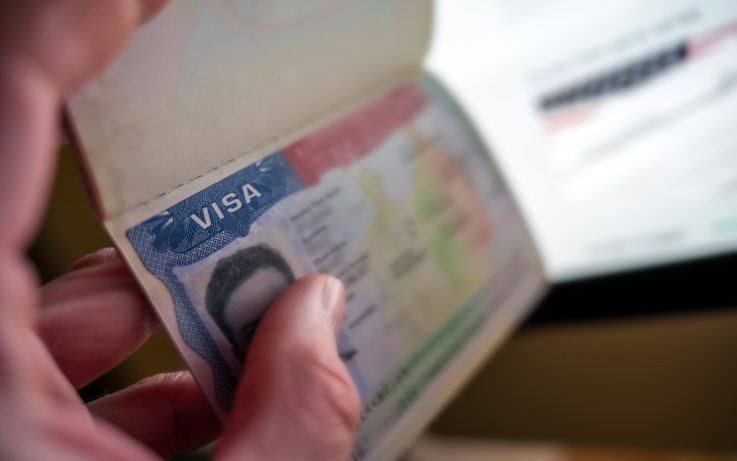
The country’s system for legalising your stay and obtaining residency is a two-stage process. The Visto de Residência para Nómadas Digitais is often referred to as the Portuguese D8 visa. To obtain it, you must first apply for a national D8 visa, which is affixed to your passport. It allows for two entries into the country for a total of 120 days. The main purpose is to apply for a Portuguese residence permit.
During this time, you must submit an application to the immigration service, AIMA (Agência para a Integração, Migrações e Asilo), for a residence permit. If your application is successful, you will be granted resident status — Autorização de Residência (AR) — and issued with a plastic card. Its official name is Título de Residência, but in everyday language it is usually referred to as the Cartão de Autorização de Residência.
The card is initially issued for two years and can subsequently be renewed multiple times for three-year periods. It is a mandatory requirement that you continue to meet all eligibility criteria. You must not be absent from the country for more than 6 consecutive months or a total of 8 months during the validity period of your Portuguese residence permit for remote work between renewals. Generally speaking, after 5 years you are permitted to apply for permanent residence, and after 10 years for citizenship. However, this stage is not compulsory – you may remain in the country legally on the basis of your initial residence permit.
The key difference from the D7 Visa (Visto para Titulares de Rendimentos Passivos) route is the type of income. To apply for a remote worker visa in Portugal, you must provide invoices or contracts, as well as documented evidence of regular incoming payments into your bank account. The D7 visa, on the other hand, is geared towards passive income, which may come from rental payments, dividends or interest on deposits.
Who is the Portuguese D8 visa suitable for?
This route is aimed at foreign nationals for whom the standard Schengen tourist visa (Short-stay rule, officially the Schengen Borders Code) is no longer suitable. The reason is that the 90/180 rule allows a foreign national to stay for no more than 90 days in any 180-day period, but this is often insufficient for a comfortable relocation.
Therefore, if you wish to stay in the country for an extended period or have plans to obtain permanent residency or citizenship, a Portuguese D8 visa may be suitable for you. However, this is not a one-size-fits-all solution; the main eligibility criteria are a stable, sufficient and exclusively foreign source of income.
Requirements for a Portuguese residence permit for remote work:
| Applicant category | Source of income | Eligibility criteria |
| Remote or contract workers | Active employment with one or more foreign employers |
|
| Freelancers, remote workers | Payments from overseas clients |
|
| Online entrepreneurs | Own businesses: start-ups, IT products, international consultancy |
|
| Families of digital nomads | Full financial support from the main applicant |
|
Obtaining a D8 visa for remote workers and freelancers requires full compliance with immigration requirements. It is therefore essential to prepare thoroughly before submitting an application; the preliminary planning stage is mandatory.
Portugal’s D8 visa: requirements and conditions
The main eligibility criterion is financial. The country’s immigration legislation is clear and transparent, but for most prospective relocators it is quite specific. You must therefore ensure that you understand the requirements and are prepared to meet them.
In Portugal, all calculations are based on a standard minimum income index. Officially, this figure is known as the RMMG (Retribuição Mínima Mensal Garantida), but in everyday language it is more commonly referred to as the SMN (Salário Mínimo Nacional); both terms are equivalent.
Another nuance relates to the specifics of the calculations. When assessing a candidate’s eligibility for a D8 visa for freelancers, their minimum, guaranteed and regular income is taken into account, based on the SMN/RMMG figure. You must confirm that your average income over a three-month period is at least four times this figure. This amounts to €3,680 per month.
If you wish to bring your family with you to Portugal on a Digital Nomad visa, the minimum requirements will be higher. For a spouse or dependent parents, you must add at least €460 per month (€6,440 per year) to the total figure — this is 50% of €920 per person, based on 14 payments per year. For each child, an additional 30% is required, amounting to at least €276 (€3,864 per year).
Meeting the SMN/RMMG requirements does not guarantee that your application will not be refused, so additional sources of financial means will be an advantage. A rough practical benchmark is €15,000; this significantly reduces the likelihood of a negative decision due to insufficient financial standing (Falta de idoneidade financeira, or Insuficiência de meios de subsistência).
Other basic requirements for obtaining Portuguese residency for remote workers; details may vary depending on the specific consulate or visa centre:
- A valid passport. It must remain valid for at least three months after the expiry date of the visa sticker. This means the total validity period at the time of application to the consulate must be more than 7–8 months. Your passport must have at least two blank pages; you will need to prepare copies of all its pages in advance, as well as a copy of your internal/national identity card. There are no formal requirements for these copies to be notarised; in most cases, a high-quality scan is sufficient.
- Health insurance. To submit an application to the consulate, you need cover of at least €30,000, valid for at least 120 days; the actual minimum requirements vary depending on the country. To obtain a D8 visa for freelancers, you will need a private health insurance policy (Seguro de Saúde). All resources and services provided by the National Health Service (Serviço Nacional de Saúde) will only become available once you have obtained a remote worker visa for Portugal and registered as a tax resident.
- Documentary evidence of remote work. Only active income is accepted. Passive income, if any, will confirm your financial stability and reduce the risk of your application being refused, but it must not be your main source of income. The set of documents required depends on your status — the requirements differ slightly for employees and freelancers.
- Documentary evidence of accommodation in Portugal. This is one of the strictest screening criteria. Short-term rentals booked via services such as Booking.com for 1–2 weeks are not accepted at all. The de facto standard is a long-term tenancy agreement (Contrato de Arrendamento) for a period of one year or more. The document must be an official one, and it must be registered with the tax authorities. Before visiting the consulate or visa centre, ensure you have the relevant form with a QR code (Imposto do Selo). Options such as a notarised statement from a Portuguese resident willing to host you, or an Airbnb booking for at least 4–6 months, are theoretically acceptable, but they increase the risk of your application being refused.
The consulate or visa centre may request additional documents, references or certificates to confirm your good standing. You should be prepared for this when planning to rent accommodation, book tickets or carry out other activities that require specific dates to be taken into account.
Obtaining a Portuguese D8 visa
The procedure consists of two interlinked stages. The first is carried out in your country of citizenship or permanent residence via a consulate or visa centre. The second takes place after you have entered Portugal. If your application is approved, you will first receive a national visa, followed by a standard AR residence card. For EU/EFTA citizens, the first stage is not required, as they enjoy the right to free movement within the Schengen Area.
The standard processing time for an application at the consulate is no more than 60 days, as stipulated in immigration legislation (Regulamento da Lei de Estrangeiros). The actual waiting time is between 2 and 8 weeks, but delays may occur. For example, during the holiday season or when staff are particularly busy, this can take up to 3 months.
You will have 120 days after moving to Portugal to apply for a Portuguese residence permit as a Digital Nomad. The procedure is handled by AIMA, not by SEF (Serviço de Estrangeiros e Fronteiras), as was the case until 2023. It is difficult to estimate the waiting time. You may have to wait a long time for a call from AIMA; this is not specified in the law. The formal 90-day period only begins once you have submitted your biometric data; the wait often extends by a further three months. You will then receive your AR plastic card by post.
The requirements for the documentation package depend on the stage of the process and are subject to change. Therefore, be sure to request up-to-date information before submitting your initial application. The rules must be followed in full, as rejections are often due solely to procedural errors.
If you require further information on this matter, please contact our specialists.
FAQs
Is it possible to work for several foreign companies?
Yes. To obtain a visa for remote workers in Portugal, it is not necessary to have a single major contract. You can provide contracts with several overseas clients. The main thing is that the income from all invoices or statements for the last few months must be exclusively from abroad and consistently exceed the set limit.
Is it possible to move the whole family at once?
Following the latest amendments, immigration legislation strictly distinguishes between the concepts of a ‘companion’ residence visa and a ‘family reunification’ residence visa. Immigration legislation allows for the simultaneous submission of an application under the ‘accompanying’ route, but only if all eligibility criteria are met. The practical applicability of this option largely depends on the specific consulate.
Is knowledge of Portuguese required?
There are no such requirements when obtaining a Digital Nomad visa for Portugal and applying for a residence permit. In everyday life in major cities (Lisbon, Porto) and digital nomad hubs, English is sufficient. Requirements regarding a minimum knowledge of Portuguese will arise at the stage of further naturalisation — when applying for permanent residence and citizenship.