The D7 visa for Portugal: A residence permit for financially independent individuals
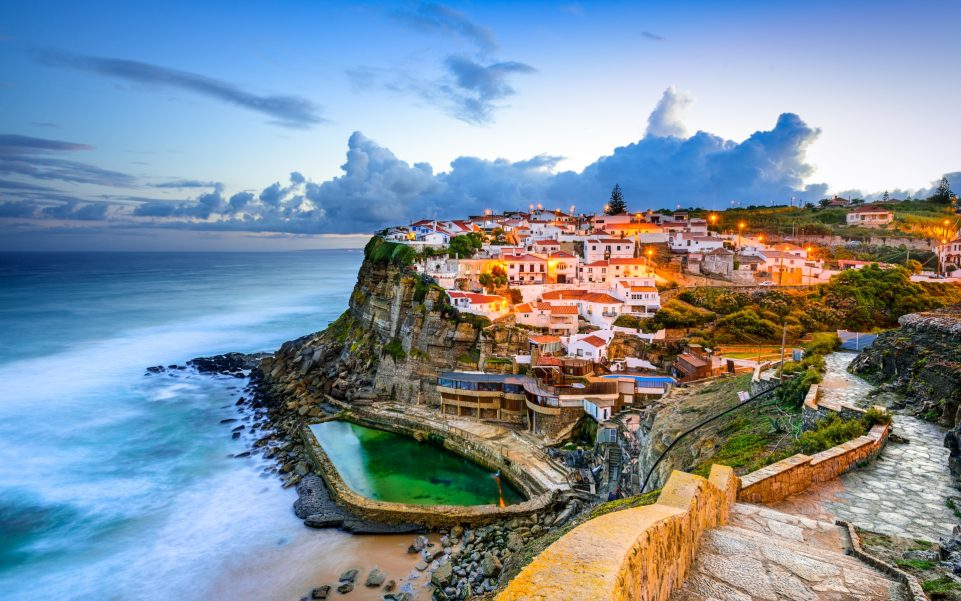
The D7 visa in Portugal is one type of long-term residence permit in the country. It is aimed at foreign nationals with a stable passive income from sources outside Portugal. This route is suitable for you if you are able to meet your basic needs without working in the country. The D7 residence visa for Portugal is most often chosen by pensioners, rentiers and investors. You will be able to enjoy the rights of a resident and, in the future, apply for permanent residence or citizenship.
The main advantage of moving to the country is comfort. This is evident in everything: the mild climate, the relaxed pace of life, safety, well-developed infrastructure, robust social security programmes, and high-quality healthcare. The economy is stable, and prices for basic goods and services are relatively low.
If you are interested in Portuguese residency based on passive income, you must first obtain a D7 national visa before relocating. If approved, you will have approximately 120 days to move and submit an application for a residence card, which legally confirms your right of residence. It is called the Título de Residência. If your application is approved, your legal status will be confirmed by this residence card.
Who is eligible for a Portuguese residence permit under the D7 visa?
The main condition relates to the source of income. It must be passive, regular and not linked to employment or the active running of a business in the country. However, you may receive income from commercial operations provided you are not involved in the management of the company or its operational activities.
An additional condition is that the income must be sufficient to cover living costs. In practice, this is assessed using the standard SMN (salário mínimo nacional) index. This is the minimum income threshold in Portugal, which is reviewed annually. For 2026, it is set at no less than €920, but meeting this condition does not guarantee that your application will be approved. Official documents often use the RMMG (Retribuição Mínima Mensal Garantida) index, which is equivalent to the minimum wage.
The actual financial requirements for a Portuguese residence permit based on passive income are as follows: the main applicant must have 1 SMN; a husband, wife or partner adds approximately 50% to this amount; and each child adds approximately 30% to the total. To apply for a Portuguese D7 visa, you must provide documentary evidence that all three conditions are met.
What types of passive income are eligible:
- pension;
- income from property rental;
- dividends;
- interest, investment income;
- income from intellectual property;
- company profits, if the applicant is not engaged in active business operations.
Moving to Portugal on a D7 visa involves lower financial requirements than the Golden Visa programme (ARI, Autorização de Residência para Investimento). This immigration route is often chosen by well-off pensioners, owners of overseas property, investors and rentiers.
Key requirements
Obtaining a Portuguese D7 visa is subject to the fulfilment of several mandatory conditions. The financial criteria are important, but not the only ones. You must demonstrate a stable passive income of approximately €11,040 per year, plus an additional €5,520 for a spouse and €3,312 for each financially dependent family member. To reduce the risk of refusal, it is advisable to provide documentary evidence that this amount for the coming year is already held in a Portuguese bank account ( ). This requirement is not enshrined in law; it should be regarded as a minimum practical guideline. Prepare all necessary supporting documents in advance.
Other requirements for the Portuguese D7 visa:
- Health insurance. The minimum cover amount is €30,000. Approximate monthly premiums are €30–60 for basic plans and €60–120 for policies with extended cover. For those aged 50 or over or with chronic conditions, the requirements are often higher.
- A valid passport, the validity of which must fully cover the intended duration of your stay in the country.
- Proof of accommodation in Portugal. Standard options include a tenancy agreement or a property purchase contract. Temporary accommodation in a hotel or hostel is usually not acceptable, as you must demonstrate that you intend to reside there permanently.
- No criminal record. To immigrate to Portugal on a D7 visa, you must provide a certificate issued in your country of permanent residence or domicile.
In some cases, additional requirements and/or conditions may apply. Therefore, during the preparation stage, you must request up-to-date information from the consulate, visa centre or your lawyer.
Submitting an application
A Portuguese residence permit for financially independent individuals is often associated with a high level of wealth, but this is not entirely accurate. When gathering documents and preparing to submit your application, it is important to remember that your income must be passive, regular and sufficient to cover your living expenses. The Portuguese D7 visa is not equivalent to the ARI programme.
Key organisational details:
- Where should you apply? Only from outside Portugal — in your country of permanent residence, at a consulate or a certified visa centre. You may complete the application form online, but you must submit the documents for the Portuguese D7 visa in person.
- What do you need to prepare? The minimum set of documents includes the application form, a valid passport, several photographs, a certificate of no criminal record, proof of income and accommodation in Portugal, health insurance, and a personal bank account with sufficient funds. You will also need a NIF, which must be obtained in advance.
- What is the procedure? A consulate or visa centre official will check the originals and copies of all documents; in most cases, you will need to provide biometric data. An interview may be required, but is not mandatory. You will also need to pay the consular fee.
- How is a decision made on a Portuguese residence permit under the D7 visa? Your application will be reviewed by the immigration authorities once all the documents have been received. The consulate may request clarification regarding the source of funds or additional supporting documents, such as a tenancy agreement. If the decision is positive, a Portuguese D7 national visa will be affixed to your passport.
- What should you do after entering the country? You will have approximately 120 days to apply for a Portuguese residence permit based on passive income. This must be done in person at an office of the immigration service AIMA (Agência para a Integração, Migrações e Asilo). You must have your passport, D7 visa, proof of address, proof of funds and biometric data to hand.
Once your application is approved, you will be issued with a residence card (Título de Residência). This is the main document confirming your right to reside in the country. The approximate processing time for the application is 1 to 3 months. However, if further checks are required or AIMA staff are very busy , the wait may be prolonged. The D7 national visa is not intended to cover the entire period. Your main task is to submit an application for a Portuguese passive income visa – legally, an application for a residence permit – within 120 days. If this is done, your immigration status in the country will remain lawful.
Conditions for maintaining status, renewal
A Portuguese residence permit under the D7 visa allows you, provided you meet the eligibility criteria, to live legally in the country, travel within the Schengen area and, if necessary, plan further immigration steps. However, this status is not indefinite and does not replace permanent residence (residência permanente).
The residence permit must be renewed to maintain legal resident status. The first Portuguese passive income visa is usually issued for 2 years. Thereafter, provided the standard requirements are met, it can be renewed for a further 3 years. Transitioning to permanent residence or citizenship is not mandatory.
The main condition for renewal is compliance with the required periods of stay in the country. A D7 visa holder must not be absent from Portugal for more than 6 consecutive months or more than 8 months in total during the validity period of the residence permit. Exceptions are permitted only for valid reasons (such as study, business or force majeure), and documentary evidence is mandatory.
If you decide to apply for permanent residence in Portugal after a D7 visa or directly for citizenship, you must meet the requirements regarding the minimum period of naturalisation or legal residence in the country. For permanent residence — at least 5 years; for citizenship — at least 7 or 10 years. The procedure involves preparing a separate set of documents, a language proficiency test and an assessment of your level of social integration.
Practical aspects of life
The biggest expense is rent. Prices vary greatly depending on the region and specific area. They are higher in Porto and Lisbon, and lower in smaller towns and rural areas.
Average monthly rent for a studio or one-bedroom flat:
- small towns — €500–800;
- Porto — €850–1,200+;
- Lisbon — €1,200–1,700+.
When signing a tenancy agreement, a refundable deposit of 1–2 months’ rent, proof of income and a Portuguese NIF are usually required. The property owner may ask you to provide a guarantor or pay a deposit in advance.
Prices for basic foodstuffs and essential goods are often lower than in other EU countries. However, compared to countries in Eastern and Southern Europe, they are relatively high. The situation is similar in major cities and resort areas. Utility costs are moderate, but they rise in winter due to heating.
The average monthly budget for a single person is around €1,500, for a couple €2,500–3,000, and for a family €4,000–5,000. These are not mandatory legal requirements, but rather average figures.
Holders of a Portuguese residence permit based on passive income usually opt for private health insurance. It simplifies and speeds up access to medical services, covering basic risks. To open a personal bank account, you will need a permanent address, a NIF number and proof of income. English is widely spoken in major cities and tourist centres. However, for a comfortable life, or if you plan to apply for permanent residency and citizenship, you will need to learn Portuguese.
If you need help obtaining a Portuguese residence permit under the D7 category, please contact our specialists in any way that suits you.
FAQs the D7 visa for Portugal
Can I work in Portugal with a D7 visa?
To obtain a D7 visa and subsequently apply for a residence permit, a key requirement is a regular passive income. Once you have obtained a residence permit, you acquire all the rights of a resident, including the right to work and run a business in Portugal. However, when renewing your status, maintaining a basic passive income remains a mandatory requirement, whilst active earnings are considered an additional advantage.
How do I renew my visa and switch to permanent residence?
The first residence card is issued for 2 years. Provided you meet the standard immigration requirements, the residence permit can be renewed every 3 years through the AIMA service. Applying for permanent residency is not mandatory. If this is the route you wish to take, after 5 years of legal residence you can apply for permanent residency, and after 7 or 10 years — for citizenship.
Can I bring my family over straight away?
Yes, the law provides for this option. Legally, this is processed through the family reunification programme (Reagrupamento Familiar), even if you cross the border together as a family. Practical details and requirements may vary depending on the specific consulate.