Tourist visa for Portugal

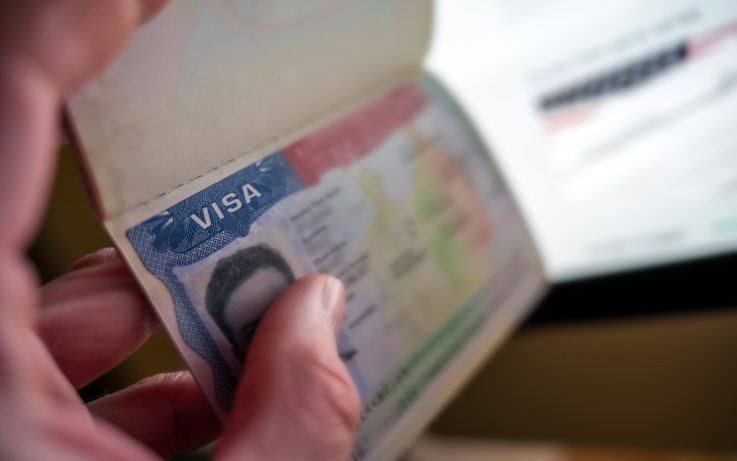
A tourist visa for Portugal allows you to enter the country legally and explore its culture, history and traditions. Generally speaking, this type of visa is suitable for short private visits, provided the duration of your stay does not exceed 90 days within any 180-day period.
The official name is the Portuguese Schengen Short-Stay Visa (Schengen Short Stay, type C, or Visto de Curta Duração). The 180-day period is not fixed in time. At the time of entry, the total duration of your stay in any Schengen country within the 180-day period, plus the time you plan to spend in Portugal itself, must not exceed 90 days. This is the standard 90/180 rule.
A short-stay Portuguese C visa allows you to travel freely to any country in the Schengen Area, as well as Madeira and the Azores. However, this entry permit does not grant the right to work or conduct business – other routes are available for these purposes. Portugal must be your main destination; the assessment criterion is the number of days you intend to stay. The standard consular fee is €90 for adults and €45 for children aged 6 to 12.
Who needs a Schengen tourist visa for Portugal
Citizens of the European Union and the EFTA (Iceland, Liechtenstein, Norway and Switzerland) enjoy the right of free entry into the country. They may legally live and work in Portugal using their national passport or identity card. Citizens of countries benefiting from visa-free entry must first obtain an ETIAS (European Travel Information and Authorisation System) authorisation. The legal basis for this is the Regulation of the European Parliament and of the Council of 12 September 2018 (Regulation (EU) 2018/1240).
Nationals of third countries (Nacional de um país terceiro) require a short-stay visa for Portugal. Provided all legal requirements are met and you are able to prove your financial means, there are usually no problems in obtaining it. However, such a visa does not generally grant the right to work or conduct business. An exception to the general rules applies to holders of diplomatic and service passports from certain third countries. Crew members of ships and aircraft are exempt from the requirement to obtain a tourist visa for Portugal.
A special case applies to third-country nationals from countries that have concluded a visa-waiver agreement. They do not require a special entry permit. However, this option is only available if you hold a new-style passport with an integrated biometric module. If your passport is an older model without a chip, you will need to apply for a Schengen visa for Portugal.
Typical uses:
- A classic holiday. Portugal is a country with centuries of history and a well-developed tourist infrastructure. It boasts many ancient and medieval monuments, a mild climate, relatively low prices, a diverse cuisine and rich cultural traditions. When you visit, you’ll be able to enjoy the kind of holiday you’re used to.
- A trial stay prior to relocation. A Portuguese C visa is an effective way to gain a practical understanding of what life is like in the country. Renting accommodation, opening a bank account, and obtaining your personal tax identification number (NIF – Número de Identificação Fiscal). You’ll be able to experience the cuisine, the quality of healthcare, the attitude towards foreigners and the distinctive Portuguese way of life for yourself.
- Business meetings and finding partners. Running a business is not permitted. However, you will be able to take part in negotiations, discuss contracts with suppliers or attend conferences.
- Medical tourism. The country has a well-developed healthcare system; most clinics have qualified and attentive staff, adequate technical facilities and a robust laboratory infrastructure. Therefore, if your stay is within the 90-day limit, a Schengen tourist visa for Portugal can be considered your primary option.
- Private visits. There are many possible reasons: visiting relatives and friends, taking part in family events, meeting key contacts, and so on.
A short-stay visa for Portugal is also suitable for study purposes, for example, on time-limited language courses, summer schools or intensive courses in virtually any field. You will be able to attend sporting and/or cultural events, festivals, exhibitions and masterclasses. If your plans do not contravene the 90/180 rule, it is worth considering this type of entry permit.
Key requirements
Entry into Portugal on a Schengen visa for tourism purposes is subject to several conditions. The three main ones are a valid passport, sufficient financial means and medical insurance. There are others, but these are not universal and may only apply in specific situations. It is best to check the latest information immediately before visiting the consulate or visa centre.
Passport (Requisitos do Passaporte)
The passport must be valid for at least three months beyond your planned date of departure from the Schengen Area. The passport must have been issued no more than 10 years ago. The passport must have at least two blank pages; these are required for affixing a short-stay visa for Portugal and for border stamps.
Financial Requirements (Meios de Subsistência)
The basic requirement is €75 for entry and €40 for each day of stay in the country. These amounts are set by the Ministry of Foreign Affairs (MNE, Ministério dos Negócios Estrangeiros). You may be exempted from meeting the financial requirements if you provide a letter of guarantee from a Portuguese sponsor (Termo de responsabilidade), who will legally cover all your expenses.
However, this requirement should not be regarded as sufficient on its own. When assessing an individual applicant’s situation, the consulate refers to the Schengen Visa Code, which stipulates the requirement to verify actual financial means. This means that entering Portugal on a Schengen visa may prove very difficult if you only meet the minimum financial requirements. To increase your chances, it is advisable to budget for approximately €100–€120 per day, although there is no formal legal basis for this.
Travel insurance for a Schengen visa (Seguro de Viagem)
The minimum cover is €30,000 (Regulation (EC) No 810/2009). The insurance must cover the costs of emergency care, hospitalisation and repatriation. The area of coverage is the entire Schengen Area, not just Portugal. The validity period must be at least as long as the duration of your stay in the country.
Documents required to apply for a Portuguese tourist visa
The standard requirements for a tourist visa are less stringent than for other types of visa. However, they must be met. Visa rules are subject to change, but you are unlikely to be asked for additional documents at the border control point.
What you need to prepare:
- International passport. Be sure to make copies of all completed pages. If you have a second passport, even an old or cancelled one, it is also worth bringing it along. This may be important for confirming a good visa history.
- Visa application form (Formulário de Pedido de Visto). This is completed online via the Portuguese Ministry of Foreign Affairs’ official E-Visto portal when applying for a visa at the consulate. The language is Portuguese or English. You then print out the document and sign it in two places – in section 37 and at the very end.
- Proof of accommodation (Comprovativo de Alojamento). There is no formal ban on making bookings via online services such as Booking.com. However, in practice, consulates often view such cases unfavourably towards the applicant, or ask them to provide documentary proof of payment — a stamped voucher, a receipt or a bank statement. The document must list all applicants, not just the person who actually made the payment.
Portugal’s visa requirements stipulate that invitations from relatives, friends or business partners must be supported by documentary evidence. Sufficient financial means can be demonstrated by a certificate of employment, a bank statement or a sponsorship letter from a close relative. Before crossing the border, ensure that you have medical insurance and have either purchased or booked return tickets. If your Schengen tourist visa for Portugal is issued for a journey by car, prepare a detailed itinerary and international motor insurance.
Key points of the procedure
You can submit your application for a tourist visa to Portugal in your country of permanent residence or in a country where you have legal status (residence permit, permanent residence, etc.). Formally, you have the right to choose the type of visa – single-entry, double-entry or multiple-entry. However, the extended options require additional legal documentation.
You can apply for a tourist visa to Portugal through the consulate or an accredited service provider — BLS International or VFS Global — but this option is not available in all regions. The requirements for translating documents into Portuguese or English also vary by country.Remove featured image
Each application is strictly individual. Therefore, if you wish to enter Portugal with your whole family, each person will need their own application form. You can submit your application no earlier than 6 months before your desired date of entry; ideally, 3–4 months in advance.
In principle, you must attend in person if you have not provided biometric data within the last 5 years. The exception is children under 12 years of age. In practice, consulates or visa centres do not, in most cases, accept applications through representatives, requiring you to attend in person.
You can pay the consular fee on the spot, usually in cash or by bank card: €90 for adults and €45 for children aged 6–12. The cost of a tourist visa for Portugal when applying via an authorised visa centre will be slightly higher – an additional €30–€40.
The standard processing time for an application is no more than 15 calendar days, counting from the day your documents were accepted. In practice, delays may occur, for example, during public holidays or if a consular officer requests additional supporting documents. Therefore, the actual processing time for a visa to Portugal may take up to 45 days, or in exceptional cases, up to 60 days. When collecting your visa, please ensure that your passport number is correct and that your first name and surname are spelled correctly in the Latin alphabet.
Visa corridor
Período de validade do visto — a standard safeguard mechanism in EU immigration law. The visa corridor is a special grace period of 15 days. However, it is not added to the validity period of the entry document, but merely extends the timeframe within which it may be used.
A short-stay visa for Portugal is characterised by three key features in terms of dates:
- .. UNTIL… — period of validity;
- DURATION OF STAY… — the number of days of stay;
- NUMBER OF ENTRIES — the number of entries permitted.
Example. You have been granted a single-entry visa for 10 days — from 1 to 10 September. Its validity period — from 1 to 25 September — comprises ‘your’ 10 days plus a visa grace period of a further 15 days. However, the maximum number of days you may legally stay in Portugal is no more than 10 days. As the visa is single-entry, the ‘NUMBER OF ENTRIES’ parameter will be 1. Technically, this means that you can enter the country on any day between 1 and 25 September, but within this timeframe you are permitted to stay in Portugal for no more than 10 days.
If you have any further questions, please contact our specialists for more information.
FAQs
Is it possible to extend a tourist visa?
A tourist visa (type C) in Portugal can only be extended in exceptional circumstances. For example, in the event of serious illness, force majeure or for humanitarian reasons. To do this, you must contact AIMA (formerly SEF) and provide documentary evidence that you are physically unable to leave the country.
How do you determine the main country of destination?
If you are planning to visit several EU countries, you only need to submit documents to the Portuguese consulate in two situations. The first is if you will spend the majority of the days (or nights) of your trip in that country. The second is if the number of days spent in the various Schengen countries is the same, but Portugal is your country of first entry.
What should you do if your visa application is refused?
You can lodge an appeal with the Portuguese consulate, but there is little practical point in doing so. If there are no serious irregularities in your case – such as falsified documents – it is simpler and quicker to correct any errors, update your bookings and resubmit your application.