D4 student visa for Portugal
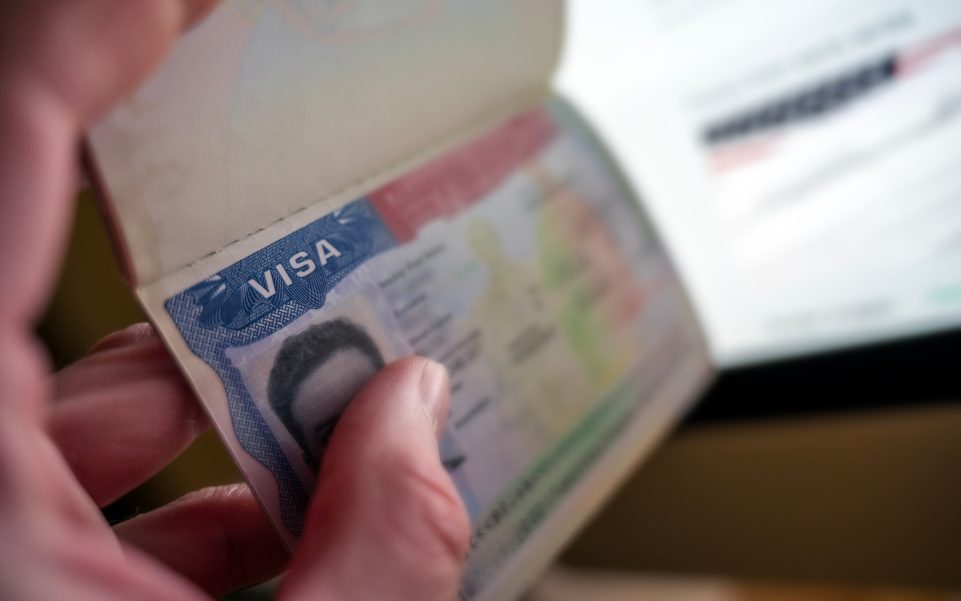
A student visa for Portugal allows you to live and study in a developed, safe and comfortable European country. Tuition fees average between €3,000 and €7,000 per year, which is significantly lower than in the UK, Switzerland or the US. For EU/EFTA citizens, a reduced rate applies, averaging €500–€700 per year. The country ranks 7th in the Global Peace Index 2024. Leading universities include the University of Lisbon, the University of Porto, the University of Coimbra, Nova University Lisbon.
The national D4 visa is issued for 120 days and allows for two entries. In effect, this document serves to legalise your crossing of the border. Upon arrival, you will need to apply for a student residence permit — AR (Autorização de Residência para Fins de Estudo) — through the Agency for Integration, Migration and Asylum (AIMA, Agência para a Integração, Migrações e Asilo, formerly SEF).
An initial student visa for Portugal is usually issued for one or two years, with the possibility of renewal; the total period of validity corresponds to the duration of your studies. In effect, this is a full-fledged residence permit linked to your studies. Provided you meet a number of additional conditions, you will be able to work, but for no more than 20 hours per week. This restriction is lifted during the holidays. A student visa for Portugal can be the first step towards obtaining a residence permit, permanent residency or citizenship. However, this is a separate immigration route with its own requirements and mandatory conditions.
Who is eligible for a student visa for Portugal?
The basic requirement is documented proof of enrolment at an accredited educational institution. Possible options include a state university, a private college, a polytechnic institute, a language school or a vocational training programme. If the educational institution is not accredited, AIMA will not consider your application and it will be refused.
EU/EFTA citizens do not require a Portuguese student visa. They may enter the country freely on the basis of their national passport. If the intended duration of stay in Portugal exceeds 3 months, they must obtain a registration certificate (Certificado de Registo de Cidadão da União Europeia) from their local council (Câmara Municipal). A separate Portuguese D4 visa, awaiting a decision from AIMA, and compiling a set of documents — all these requirements apply only to third-country nationals.
You will have the opportunity to bring your family with you. However, this immigration route is subject to additional conditions regarding accommodation and income. You should therefore prepare thoroughly for the procedure, taking into account not only the current legal requirements but also the specific procedures for issuing a national D visa for study in Portugal at the relevant consulate.
Key requirements
The basic requirement is confirmed enrolment as a student. The document must clearly state the name of the educational institution and the chosen course, as well as the duration of the course. If this information is missing, you may encounter problems when applying for a national D visa for study purposes. Another mandatory requirement is that the educational institution must be accredited by A3ES (Agência de Avaliação e Acreditação do Ensino Superior), DGEstE or IEFP.
The financial requirements for obtaining a student visa for Portugal are not explicitly set out. The law itself does not specify a minimum amount or the method for calculating it. However, the subordinate legislation, Portaria n. 1563/2007 states that a student must prove they have sufficient means of support. The calculation is based on the standard RMMG (Retribuição Mínima Mensal Garantida) indicator, but in everyday usage the term SMN (Salário Mínimo Nacional) is more commonly used in everyday life. Both indices mean the same thing; there is no link to the IAS (Indexante dos Apoios Sociais).
The RMMG is currently set at €920. Therefore, when applying for a student visa for Portugal in 2026, you must demonstrate that you have at least €11,040 in your account. In some cases, this amount may be reduced. For example, if you provide proof that the university has allocated you free accommodation on campus or has already paid for part or all of your tuition and accommodation for the year in advance. However, in practice, when applying for a student visa for Portugal, it is advisable not to rely solely on the minimum requirements, but to have a little extra to fall back on.
Other requirements and conditions:
- Certificate of no criminal record (Certificado de registo criminal). You must obtain this from every country where you have lived for more than a year. The document must have been issued within the last 90 days. Requirements regarding the apostille and mandatory translation depend on the consulate and the country in which you are applying for a student visa to Portugal.
- Health insurance. The law itself does not specify any formal requirements regarding the amount of cover. However, €30,000 is the strictly mandatory minimum for short-stay Schengen visas (type C). Therefore, when preparing for your visit to the consulate, it is best to base your plans on this specific amount. The policy must cover the entire duration of the Visto Nacional para Fins de Estudo — 120 days.
- Air tickets. You will need to purchase or book a ticket to Portugal – either with an open-ended or fixed return date. If the duration of your studies is up to one year, you will also need a return ticket to ensure you can return home.
- Proof that you will have accommodation. Along with the financial requirements, this is one of the strictest requirements in recent years. You must provide documentary evidence that your temporary student visa will not leave you homeless. Standard options include a letter from the university confirming a place in a hall of residence (Residência universitária), a long-term tenancy agreement (Contrato de arrendamento) or an invitation from a Portuguese resident who will provide you with accommodation (Termo de responsabilidade para alojamento).
The minimum requirements also include a valid passport with two blank pages, a completed visa application form (Formulário) and two standard passport photographs.
Submission of documents, legalisation
A student residence visa is the standard immigration route for students. It consists of two stages. First, you must obtain a national visa from the consulate, which will authorise your entry into the country. Only then, once you have your letter of enrolment, can you apply for a residence permit and receive your AR.
The consular stage in your country of permanent residence
It is best to start the procedure 3–4 months before the course begins, even if official sources suggest shorter timeframes. The aim of this stage is to obtain a D national visa for study purposes. This permit is valid for 120 days; during this time, you enter the country and apply for a student visa for Portugal – effectively, a residence permit for study purposes. Be sure to check that all legal requirements have been met – these often change without specific notice. Consequently, your application may be refused on a technicality.
Once you have gathered all the documents required for a student visa to Portugal, you can book an appointment at the consulate or an accredited VFS Global visa centre. You must do this in the country where you hold valid residence status.
The application fee is €110. If you apply via a visa centre, a service charge of between €33 and €40 will be added to this amount. The standard processing time is no more than 60 days. In practice, delays are possible, particularly during the holiday season. If your application is successful, a student visa for Portugal will be affixed to your passport. In most cases, you will also receive an automatically generated code or link with the date of your pre-booked appointment at an AIMA office.
Applying for a residence visa to study in Portugal
The AIMA appointment confirmation obtained from the consulate will confirm the legality of your stay in the country for 120 days prior to the actual issue of your residence permit.
What to do after moving:
- Obtain an entry stamp. This is usually done immediately by a border control officer. If you are on a transit flight, you will need to declare your stay in the country (Declaração de Entrada). This can be done online via the official AIMA portal; when you check into a hotel or student accommodation, your details will be forwarded automatically.
- Visit the AIMA office for students. In most cases, the specific date and time are issued automatically at the consulate. Before your visit, ensure you have a complete set of documents to hand, including confirmation of enrolment, a recent bank statement and your permanent address in Portugal. Following the update to the fees, the government fee for issuing a student residence permit is €99.8; for certain procedures, the official costs may be higher – up to € You will later receive your physical residence card (Título de Residência) by post.
A Portuguese residence permit for students pursuing higher education is issued for 3 years. Under EU mobility programmes and inter-university agreements, it is issued for 2 years. Students on language courses and short programmes are usually granted a residence permit for one year. Provided all eligibility criteria are met, an extension may be granted for the duration of the course.
When planning to apply for a student residence permit, you need to consider the financial aspect. You must demonstrate that you have sufficient funds to support yourself (Meios de subsistência). Possible options include a bank statement, a document confirming the award of a scholarship or grant, a sponsorship declaration or a letter of guarantee (Termo de responsabilidade). If you have been admitted to a university accredited by AIMA, the requirements for proving financial means may be relaxed or waived altogether.
What to do after completing your studies
Extending your student residence permit is only possible whilst you are enrolled on a course. Changing your immigration status whilst studying is, in principle, possible, but involves certain difficulties. However, once you have obtained your degree, you will have a range of options for your next steps.
What you can do:
- Look for work after university. A student residence permit can be converted into a new one focused on exploring the labour market. This type of residence permit is called ‘Autorização de residência para graduados em instituições de ensino superior para procura de trabalho’ and is valid for up to one year. If you have a full-time contract, you can apply straight away for a work residence permit (Autorização de Residência para Exercício de Atividade Profissional Subordinada).
- Freelancing or running a business. Enrolling at a Portuguese university means making new connections, meeting new people and integrating into society. All these benefits can be utilised for freelance work (Residence Permit for Self-Employment) or running a business (Residence Permit for Business Activities).
- Passive income. This option is suitable for you if you have a stable source of income. The ‘Residence Permit for Self-Employed Persons’ (Autorização de Residência para Titulares de Rendimentos Próprios) is not a one-size-fits-all solution, but in a number of cases its benefits significantly outweigh certain restrictions.
Converting a Portuguese D4 visa into any of these categories allows you to live and work in the country whilst renewing your residence permit, provided certain conditions are met. An alternative is to change your immigration status. After 5 years, you may apply for permanent residence; after 7 years (for EU citizens and citizens of CPLP countries) or 10 years (for other foreign nationals, including citizens of the Russian Federation and the CIS) — for Portuguese citizenship following completion of your studies. The period is now calculated from the date you receive your residence permit. Compliance with all requirements is mandatory and does not depend on your immigration route.
You can always request further information and personalised advice from our specialists.
FAQs
How does a D4 student visa differ from a student residence permit?
A D4 visa is a temporary entry document issued by the consulate in your country. It is affixed to your passport, is valid for 4 months and is required solely to enter Portugal legally and attend an appointment at the immigration service (AIMA). A student residence permit is your legal status, which you obtain whilst in Portugal at AIMA. It is issued for 1–2 years, replaces the visa and allows you to live, study and work legally in the country.
Is it possible to work whilst studying in Portugal?
Yes, you can work. A student residence permit in Portugal grants you the official right to work, either as an employee or as a freelancer, without the need to obtain special authorisation from the immigration service. The only condition is that work must not interfere with your studies, so only part-time work is permitted. These restrictions are lifted only during the holidays.
Is it possible to apply for a residence permit without a resident’s visa?
Generally speaking, no. In June 2024, Portugal completely abolished the Manifestação de Interesse (expression of interest) mechanism, which had previously allowed for such an arrangement. Now, a residence visa obtained from the consulate in the country of origin is a mandatory requirement for applying for an initial residence permit with the AIMA immigration service. Exceptions are extremely rare and apply only to specific cases. For standard study or work routes, entering the country without the relevant visa will prevent you from obtaining a residence permit.