Maltese citizenship
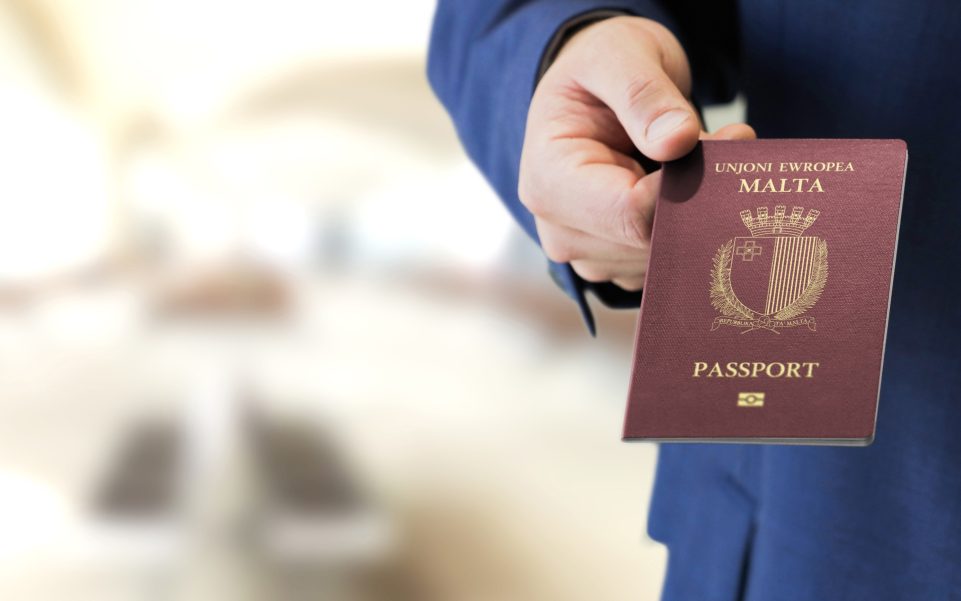
Maltese citizenship will allow you to live, work, run a business and study without restriction in a developed European country, as well as in the EEA member states – Norway, Iceland and Liechtenstein – and in Switzerland. You will gain visa-free access to more than 180 countries. A Maltese passport is one of the most valuable legal instruments, offering very high investment appeal. As of July 2026, it ranks 6th (out of 183 destinations) in the Henley Passport Index and 4th (with 173 points) in the Passport Index by Arton Capital.
The main reason for the popularity of Maltese citizenship is its highly favourable balance of features. The benefits of this jurisdiction are equally sought after by ordinary people, businesspeople and digital nomads. The situation remained virtually unchanged following the official ruling of the Court of Justice of the European Union (CJEU, Case C-181/23) on 29 April 2025. At that time, Malta’s citizenship-by-investment programme was found to be contrary to EU law.
Key benefits:
- a very high standard of living, a stable economy, and English as one of the two official languages;
- high-quality healthcare and education system;
- a relatively favourable tax environment;
- good conditions for a comfortable life: climate, infrastructure, access to essential services, personal safety, income levels, etc.
There are several ways to become a Maltese citizen following the closure of the Maltese citizenship-by-investment programme. The basic route is standard naturalisation. The main requirement is at least five years of actual legal residence in the country and integration into society. The second immigration route is through marriage. Both routes are universal and do not require the fulfilment of any specific conditions.
Less common ways of obtaining Maltese citizenship are through exceptional merit (Citizenship by Merit / Exceptional Services) or by descent (By Descent / Registration). These are immigration routes that are rarely used in practice and are tailored to specific circumstances. Neither of these options, nor any other existing routes, allows you to buy a Maltese passport. However, they may offer an interesting alternative to standard citizenship through naturalisation, provided all eligibility criteria are met.
A third group of immigration routes, which provide an answer to the question of how to obtain Maltese citizenship, is provided for in legislation but is rarely used in practice. These are adoption, re-acquisition of previously lost citizenship, and refugee or stateless status (Statelessness & Humanitarian Grounds).
Dual citizenship in Malta
This arrangement is officially permitted under the country’s constitution (Constitution of Malta, Art. 22). Renouncing one’s citizenship upon obtaining a Maltese passport is not compulsory, unlike in some countries where such renunciation is mandatory. Examples of this approach include Kazakhstan, China, India and Singapore. The immigration route is irrelevant.
It is important to understand that the international legal status of Maltese dual citizenship depends on the laws of the country you come from. The clearest option is where this possibility is recognised: either on a general basis or through bilateral inter-state agreements.
It is more common for the laws of the other country not to provide for this arrangement at all. In this case, Maltese dual citizenship means nothing to the country of origin, which continues to regard the person as one of its own. The scenario involving the loss of one’s original citizenship is less common, but it is also possible.
How to obtain Maltese citizenship
It is not possible to obtain it automatically, merely by fulfilling all the requirements of immigration law. Even those foreign nationals who applied for a passport through investment before this option was abolished could have their applications refused. It is therefore best to be prepared from the outset for the fact that the procedure will require thorough preparation and analysis of the current legislation. This is the only way to minimise the risks of being refused Maltese citizenship whilst remaining within the legal framework.
Ordinary Naturalisation
The standard route, designed for those seeking gradual and full integration into society. The minimum period of actual lawful residence is at least 5 years. You must have been present in the country continuously for the last 12 months, although short-term absences for valid reasons are permitted. The remaining 4 years are accumulated over the preceding 6 years.
You must demonstrate sufficient proficiency in English or Maltese. In most cases, standard certificates such as IELTS Academic / General Training (scores of 4–5), Cambridge English (PET – B1 Preliminary level), TOEFL iBT (scores of 42–57) or a school/university qualification, provided that the course was taught entirely in English. You must also provide documentary evidence that you have no criminal record and are of good character.
The financial requirements are based on the minimum wage or official income — €994 per month for the main applicant, with additional allowances applied for each dependent family member. However, if you rely solely on this figure, the risk of being refused Maltese citizenship will be quite high.
A more realistic benchmark is the average salary, a figure set by the National Statistics Office (NSO). For 2026, this stands at €2,270 per month. It is also advisable to demonstrate personal savings — from €15,000 in a bank account plus €5,000–€10,000 for each dependent family member. There is no such requirement in immigration law, but experience shows that it is best to comply with this condition.
Marriage to a Maltese citizen (Maltese Citizenship by Marriage)
Legally, this is not naturalisation, but rather the registration or formalisation of a legal status. The eligibility threshold under the ‘Maltese citizenship by marriage’ scheme is lower. An application may be refused, but this is usually only in cases where the applicant poses a direct threat to national security. The minimum duration is five years of marriage or an officially registered civil partnership (if recognised in Malta). The couple must have lived together for at least five years. If this condition is met but the couple are living apart at the time of application, the possibility of obtaining citizenship remains.
If a marriage certificate was issued abroad, it must first be registered with the Public Registry of Malta. You must provide evidence that the marriage is genuine. To do this, a joint affidavit must be submitted, accompanied by the relevant supporting documents. Typical examples include joint bank accounts or utility bills, tenancy and/or property deeds, car insurance policies, and birth certificates for any children the couple have together. There are other options as well.
Checks to determine whether the relationship is a sham are not mandatory, but may be carried out. The Community Malta Agency (CMA) frequently conducts random interviews and targeted home visits. If there are indications of a sham marriage, severe sanctions will follow, up to and including criminal prosecution, and Maltese citizenship will be revoked.
Special cases are subject to separate regulations. For example, the widow or widower of a Maltese citizen retains their status if at least five years have elapsed since the date of the marriage and the spouses lived together until the death of the Maltese citizen. Divorce prior to the issue of a passport does not in itself result in the loss of the right to Maltese citizenship, provided that the couple have already been married for five years. If the couple have separated but have not formally dissolved the marriage, their status may be retained.
Citizenship for exceptional services (Merit / Exceptional Services / Naturalisation for Exceptional Services)
An individual immigration route aimed at those who have made a significant contribution to Malta’s development in the fields of science, culture or sport, or who have been actively involved in humanitarian or community work. The decision is taken by the relevant minister on the recommendation of the Evaluation Board at the CMA.
Exceptional services must be substantiated by documentary evidence. Standard examples include awards, patents, sporting medals, patronage and scientific discoveries. The key criterion is the actual benefit to the country. This route is not linked to any investment requirements, but the applicant must demonstrate complete financial independence.
The Strict Due Diligence check is quite rigorous and takes place in four stages — via the CMA, Interpol and the security services. The candidate’s reputation must be impeccable, but the risk of rejection remains quite high nonetheless, as the final decision is subjective. Eight months is the standard minimum period of residence in Malta prior to submitting an application, but this may be adjusted on a case-by-case basis. The names of candidates who have been approved and granted Maltese citizenship are published annually in the government gazette, *The Malta Government Gazette*.
Maltese citizenship by descent (Acquisition of Citizenship by Registration / Descent)
This is an immigration route that does not involve a naturalisation stage. Legally, it constitutes the registration or restoration of citizenship, rather than its grant on general or special grounds. The basic eligibility requirement is supporting archival documents. The actual requirements for the applicant are minimal. You will not automatically receive a Maltese passport. However, if your documents are in order, the likelihood of refusal will be low. There are no specific requirements regarding language proficiency or income level.
The basic condition for obtaining Maltese citizenship by descent is the principle of direct ascending line, through parents, grandmothers and grandfathers. Amendments adopted in 2007 abolished the previously applicable rule of direct unbroken descent. Now, if you have Maltese roots, you can apply for Acquisition of Citizenship by Registration.
The basis for this is the documented status of your grandparents. You must confirm that your ancestor and their parent were born in Malta; this is the standard two-generation rule. If such an ancestor was alive on 1 August 2007, they would have had to register themselves; otherwise, their descendants’ entitlement is forfeited after 1 August 2028.
The main difficulty with this route to immigration is the evidence required. The relevant documents must be sourced from archives, which will require a great deal of time and additional expense. A basic background check will be carried out on each foreign applicant. The names of approved candidates are published in *The Malta Government Gazette*.
Basic requirements
The details of obtaining Maltese citizenship largely depend on the chosen immigration route. However, the main criteria remain standard, although some exceptions are permitted.
How to obtain Maltese citizenship: main conditions:
- Legality and reputation. You must hold a valid passport, have lawful residence status in the country, and have no criminal convictions or pending criminal proceedings.
- Financial independence. You must prove that you are able to support yourself and your family without relying on state social security funds.
- Health insurance. You need a valid policy providing full cover for all family members.
- Integration and language. For standard naturalisation by residence, you must demonstrate a basic knowledge of English or Maltese and an understanding of the country’s history. For other pathways, the requirements are less stringent or may not apply at all.
The standard procedure for obtaining Maltese citizenship consists of several stages. First, you must choose a suitable route, meet all the eligibility criteria and prepare a complete set of documents. You can submit your application in person at the CMA office or, if you are abroad, via a consulate or embassy. If your application is approved following a multi-stage background check, you will take an oath of allegiance to Malta, receive a standard certificate of naturalisation/registration and apply for a passport.
If you require further information on this topic or advice regarding a specific immigration situation, please contact our specialists in whatever way is most convenient for you.
Questions and Answers
When can the spouse of a Maltese citizen submit an application?
You may submit your application five years after entering into a marriage or civil partnership. You are permitted to reside either in Malta under a residence permit or abroad. The key requirement is to prove that you have actually been living together and that the marital relationship is genuine.
Is it currently possible to obtain Maltese citizenship through investment?
The direct purchase of citizenship through investment in Malta is no longer available. On 29 April 2025, the Court of Justice of the European Union ruled that the issuance of ‘golden passports’ in exchange for money contravenes EU law. The remaining alternatives are the Malta Permanent Residence Programme (MPRP) and citizenship by merit. However, their applicability is limited.
Does giving birth to a child in Malta automatically confer citizenship?
Since 1 August 1989, Malta has operated under the ‘right of blood’ rather than the ‘right of soil’. A child born in the country to foreign parents acquires the citizenship of their parents’ countries. Maltese citizenship is granted automatically only if the mother or father is already a citizen of Malta.