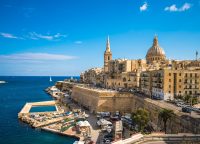
Moving to Malta
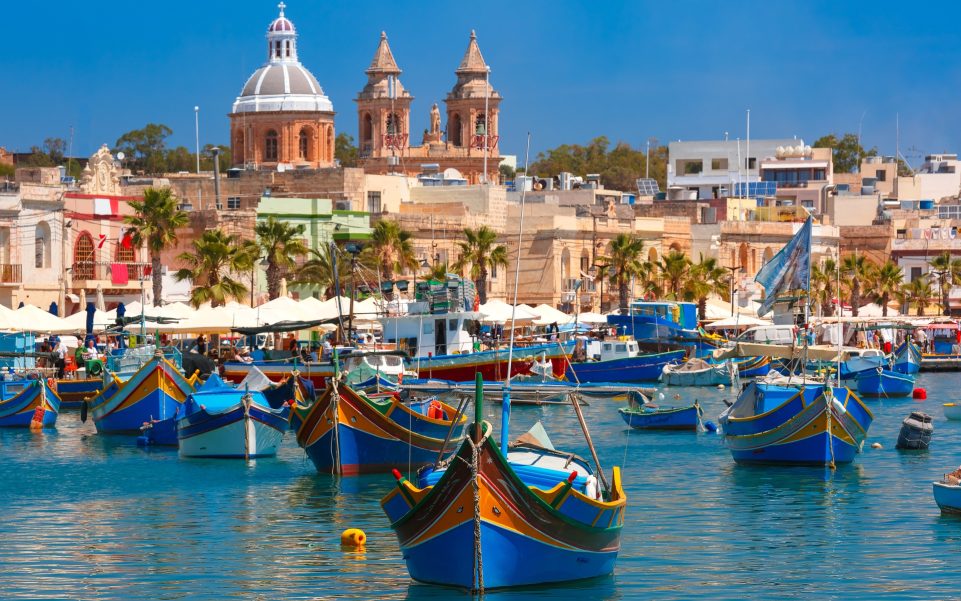
Relocating to Malta is a promising and potentially lucrative venture that will regularise your legal status in a developed European country. It offers a comfortable and prosperous environment, a mild climate, and all the amenities you need for living and leisure. A well-organised and properly managed move to Malta will allow you to work, run a business, explore the country’s culture and arts, and plan your next steps towards changing your immigration status.
When deciding to move, you need to assess the possible consequences of such a step. A tourist brochure will not give you a full understanding of how well the country suits you personally. Therefore, the question of how to move to Malta should not be your top priority. It is more important to make an informed, fact-based decision, draw up a strategic plan and weigh up the pros and cons.
If you realise that the project interests you, you need to draw up a relocation checklist. Choose the right immigration route: a residence permit for work, business, digital nomads, or any other option. This will largely protect you from unpleasant surprises, mistakes and additional costs. If you are interested in permanent residency and/or citizenship, you will need to make adjustments to your relocation plan. But in any case, you are unlikely to regret your decision to move to Malta.
Legal aspects of relocation
The options for legalising your status depend on the jurisdiction of your nationality. Therefore, different documents will need to be prepared for the move. Citizens of EU/EFTA countries enjoy the right to free movement within the European Union and the EEA/EFTA. They must apply for a residence card if they live on the island for more than three months; legally, this takes place in two stages: first, a Registration Certificate is issued – a document confirming registration of the right to reside – and then, on the basis of this, an eResidence Document is issued – a biometric ID card. This is not a residence permit, but an official registration.
Third-country nationals (TCNs) require a separate visa to move to Malta. Legally, this is a Type D national visa for long-term purposes (Long-Stay Visa), which is issued by a consulate or visa centre once the immigration authority, Identità, has approved your application. The permitted duration of stay under this visa is usually up to 180 days — this is sufficient time to begin the process of registering for a residence permit; you should check the exact duration with the consulate or visa centre when submitting your documents.
Once you have actually moved to Malta, you will need to visit the Identità office in person with a full set of documents and provide your biometric data. There, you will receive a paper ‘Interim Receipt’, which will bear a stamp corresponding to your immigration status. For example, if it is a work residence permit, this will be a ‘Temporary Authorisation to Work’ stamp. This will formalise the legal basis for your stay in the country. You will need to wait 2–3 weeks to receive your residence card. This document will serve as confirmation of your residence permit in Malta.
Residence permits for digital nomads must be applied for via the RMA (Residency Malta Agency) portal. For all other immigration routes, the standard procedure applies: obtaining a 90- or 180-day national D visa via the consulate or a visa centre – moving to Malta – formalising your status with the issue of a residence card.
Grounds for obtaining a long-term residence permit:
- employment — Single Permit, Key Employee Initiative (KEI), Specialist Employee Initiative (SEI);
- Residence permit for digital nomads / remote work (Nomad Residence);
- business, start-ups (Business, Start-up Residence, Self-Employment);
- student residence permit / study (Study);
- family residence permit / family reunification;
- Temporary or permanent residence through investment (MPRP, Malta Permanent Residence Programme).
What should you do before moving? If you want to minimise the risk of your application being refused, you should start by objectively assessing your situation and choosing the right immigration route. Preparing your application documents, dealing with the consulate or visa centre, organising your move with pets, and booking tickets are all important steps, but you should only start preparing for them once you’ve decided on the basics.
Where to live in Malta
The standard arrangement for expats is a long-term tenancy (Long Let) of one year or more. Shorter-term options are not as cost-effective in terms of monthly payments. The best areas in Malta for relocation in the so-called ‘premium’ segment are Sliema, St Julian’s, Valletta and Ta’ Xbiex, ranging from €1,000 to €2,500 for a one-bedroom flat. Mid-range properties range from €750 to €1,100. Good budget options are best found in Paola, Fgura, Żejtun, St Paul’s Bay, Bugibba and Gozo, ranging from €550 to €850.
A tenancy agreement must be drawn up; the landlord is responsible for doing this within 10 days of you moving in. If no such document exists, your application for a residence permit will be automatically rejected. The standard deposit consists of one month’s rent paid in advance and one ‘security’ month’s rent, plus a one-off agency fee of 50 per cent of the monthly rent for accommodation in Malta. Utility bills are, in almost all cases, your responsibility. The amounts vary significantly depending on whether the tariff is ‘Domestic’ or ‘Residential’.
Relocating to Malta involves some of the island’s unique characteristics. There is no central supply of fresh water; reverse osmosis systems provide water that meets all EU standards. However, it has a distinctive taste. Consequently, most expats buy bottled water or order additional filters.
There is also no central gas supply; standard LPG (Liquefied Petroleum Gas) cylinders are used for cooking and heating during the cold season. These are delivered on a schedule directly to your home, but you will have to pay for this service yourself. Air-conditioning systems are the main consumers of electricity. In winter, they are often used for heating; in summer, for cooling and air conditioning.
Working in Malta, running a business
Labour legislation protects EU citizens. If a local company wishes to hire a third-country national (TCN), it must undergo a special check by the public employment service (Jobsplus); EU/EFTA citizens are not subject to such checks. Finding work after moving to Malta is therefore a challenging task, so it is best to sort this out in advance. Attractive job vacancies in Malta are available only to specialists in niche, high-demand fields – for example, in IT and iGaming. In any case, an employment contract is mandatory.
Average annual salaries (gross, before tax) vary by sector. Service staff, retail, tourism – €14,000–€22,000; marketing, HR, management – €24,000–€38,000; IT, iGaming, finance – €35,000–€75,000. The minimum wage is €994.24 per month, which is €229.44 per week. The national average is €2,100–€2,500. However, the typical (median) figure is lower, at €1,400–€1,500 per month.
The plan to set up a business in Malta faces strict legal compliance requirements. In practice, however, there is a distinct local mindset – ‘mela’ – in other words, a laid-back approach and delays. Even if you manage to open a business bank account quickly, approval procedures often drag on for weeks or months, so external oversight is essential. It is best to launch a start-up in Malta by utilising connections within the local community, attending relevant events and maintaining an active presence on professional networks (such as LinkedIn).
Bank accounts in Malta
The leading financial institutions operating in the country are BOV (Bank of Valletta), HSBC Malta, APS Bank, BNF Bank and MeDirect. Opening an account for an expat without an EU passport is difficult, and internal checks will be stricter. Possible options include a Basic Payment Account, to which all foreign nationals legally residing in the European Union are formally entitled. You can also open an account with digital banks such as Revolut or Wise.
Both alternatives offer sufficient functionality to handle 90 per cent of typical everyday tasks. You will be issued with a standard IBAN, and in most cases, the account itself can be opened without significant delay. The only real limitation is taking out a mortgage in Malta. It is very difficult to secure one if you have an account with Revolut or Wise. You may also encounter problems when looking for work. Some employers are reluctant to pay salaries into ‘foreign’ IBANs.
Taxes after moving to Malta
The tax burden is average, but for some expats it is low, with very flexible calculation rules. The standard income tax rate is progressive and depends on income level – ranging from 0% to 35%. For foreigners in certain sectors (senior management, IT, iGaming), a special scheme known as the Highly Skilled Individuals Rules applies. If your contractual income exceeds €65,000 per year, you can officially pay a flat rate of 15% income tax — this threshold applies under the new consolidated rules (Tax Treatment of Highly Skilled Individuals Rules) from 1 January 2026; Under the previous Highly Qualified Persons Rules, the threshold for 2025 was approximately €100,061.
Another potential benefit of legal tax optimisation is Malta’s remittance basis regime. It applies to entrepreneurs, digital nomads and freelancers. The principle is that the portion of worldwide income that is not remitted to Malta is taxed at a zero rate.
To make use of Malta’s remittance basis, you must first obtain tax residency. An automatic requirement is to reside on the island for more than 183 days a year. The purpose of your stay in the country is irrelevant. An alternative option is to demonstrate genuine links and intentions. You must demonstrate that Malta has become the centre of your life’s interests. Suitable evidence includes a long-term tenancy agreement or proof of property purchase, a Maltese ID card, a contract with a local employer, or a business registered in the country.
Healthcare in Malta
The standard of healthcare is very high. At the heart of the entire system is the modern Mater Dei Hospital. If you pay social security contributions to the National Insurance Fund, basic services and medication during a hospital stay will be free of charge. This includes ambulance services, treatment, operations and childbirth. Mater Dei is quite busy, so in some cases you will need to be patient.
To avoid the risk of long waiting times, you can opt for private or alternative insurance straight away. A basic policy costs €200–€300 per year, whilst a comprehensive policy, which also covers dental appointments and high-tech medical care, costs €80–€150 per month. A visit to any doctor without insurance costs between €50 and €80.
Every chemist’s has a GP (General Practitioner) surgery attached. The queue is usually short, and the cost of a visit – which includes a consultation, diagnosis and prescription – is €15–€20. No separate appointment is required. There is a slight catch when it comes to medicines. Without a prescription, you will only be sold paracetamol and ibuprofen at most. Other medicines, including cough syrups and painkillers, require a personal prescription. To treat chronic conditions, you need a special card (Schedule V). You can obtain this free of charge, but the application process can sometimes take several months.
You can request further information on moving to Malta, as well as personalised advice tailored to your specific situation, from our specialists.
FAQs
How much money do you need to move to Malta?
To ensure a comfortable start during the first 1–2 months, it is advisable to have a reserve of €5,000–€7,000, not including any financial eligibility requirements specific to your chosen immigration route. Most of your funds will go towards rent. The remaining money will cover imported groceries (around €500 per month), household expenses and transport for the initial period.
Is it possible to move to Malta with my family?
Most immigration programmes (including the Nomad Residence Permit and the Permanent Residence Programme) allow spouses and children to be included in the application. The main condition is a proportional increase in the income or savings threshold for each family member, as well as the purchase of comprehensive health insurance. Financially dependent individuals must be included in the main application.
What are the main downsides of living in Malta?
Certain aspects of the country may present challenges during the settling-in period. The main ones are high population density, heavy traffic with frequent congestion, a distinctive climate, relatively expensive rent, a high volume of tourists, and occasional disruptions to public services (such as rubbish collection).