Immigration to Switzerland
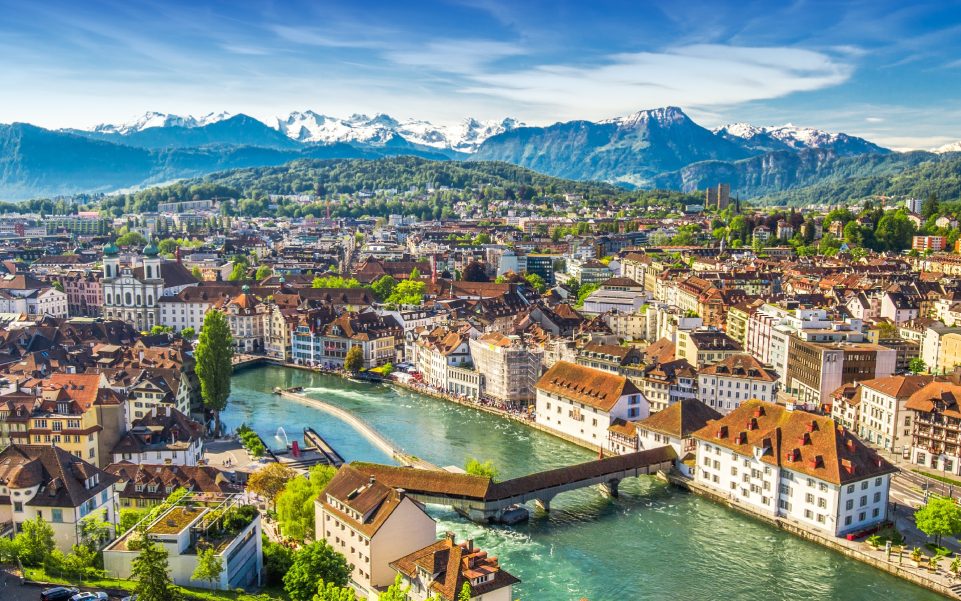
Immigration to Switzerland offers a real opportunity to change your future. The country provides its citizens with a very high standard of living, robust social security systems and safety. There are various ways to immigrate to Switzerland. However, each requires meeting a number of conditions, which may make it seem very difficult for the average person to organise a move.
However, this view is mistaken. If you clearly define your goals and map out possible relocation routes, the task becomes simpler. Generally speaking, the law provides for several standard options: immigration through employment, business, investment, marriage or study. Each is aimed at a specific category of foreign nationals; the rules for entering the country may be complex to understand, but they are logical and do not involve excessive requirements.
Features of Swiss immigration law
When issuing long-term entry permits, the government aims to maintain social stability and minimise potential negative consequences for the economy. This approach makes legal immigration to Switzerland difficult, as it artificially restricts the flow of foreign nationals who may remain in the country for an extended period.
Qualified professionals, immigrants with employment contracts, and citizens of European Union (EU) and European Free Trade Association (EFTA) countries are in a more favourable position. If a potential immigrant is a citizen of any other country, the requirements will be stricter. In this case, special quotas (residence permit quotas) apply.
These are allocated not only by central government bodies (the State Secretariat for Migration, SEM) but also by the cantons. Consequently, a Swiss migration quota may be refused in Zurich, Geneva or Zug, but approved in Uri or Obwalden.
Basic criteria for assessing candidates:
- formal indicators — education, experience, possession of an employment contract;
- shortage of workers in the profession;
- the applicant’s citizenship and/or residency;
- knowledge of one of the official languages — German, French or Italian;
- level of financial solvency.
Types of long-term residence permits
If you are planning to immigrate to Switzerland, a tourist or short-term business visa will not suffice. For long-term residence in the country, possibly with a view to naturalisation, other visas are available — L, B and G, as well as the special C permit, which is the closest equivalent to a standard residence permit. There are several key differences between the types of visas: validity period, eligibility for renewal, the categories of people who can apply for a visa, and specific conditions.
Comparison of entry permits and long-term residence permits in Switzerland:
|
Visa |
Visa category | Validity period, possibility of renewal | Who is eligible |
Conditions for obtaining a residence permit in Switzerland |
|
Residence permit type B |
Temporary | 1–5 years, yes | Experienced professionals, family members of residents , students |
|
| C-permit | Permanent | Unlimited (de facto permanent residence) | Only residents who have lived in Switzerland permanently for at least 5 years (special conditions apply to citizens of EU/EFTA countries) |
|
| Type G permit | Temporary | 1–5 years, yes | Only for citizens — workers from neighbouring countries |
|
| Type L permit | Short-term | Up to 1 year, renewable in certain cases | Temporary specialists and seasonal workers |
|
Basic requirements for legal immigration to Switzerland
The conditions for obtaining long-term entry permits depend on the type of visa. However, there are several general requirements that must be met. Therefore, the planning stage of your move should begin with an assessment of whether your case complies with current immigration legislation.
General requirements, regardless of the chosen basis for immigration:
- financial solvency — you must demonstrate that you can independently cover your basic living expenses;
- only lawful grounds — study, work, family reunification, or business activities — which must be supported by documentary evidence;
- you do not pose a threat to national security and have not previously committed any serious offences;
- valid health insurance; in some cases, a medical certificate;
- a desire to integrate into society, knowledge of the country’s language, culture and traditions.
If the rules are not fully complied with, refusal of immigration to Switzerland is virtually guaranteed. Therefore, take the preparatory stage seriously; this will help you avoid common mistakes.
Standard grounds for immigration
The option of free movement, typical of many offshore jurisdictions, is not provided for in this country. You must not only state a reason for relocation but also provide documentary evidence to support it. There are four standard routes for immigration to Switzerland: work, study, family and business/investment. An additional route is for exceptional reasons, such as the granting of political asylum, provisions of international agreements or special merits, but each such case is considered on an individual basis.
Immigration through employment
The standard route. A mandatory requirement is a confirmed contract with a local employer; highly qualified specialists and those with rare professions that are in short supply in the country have a better chance. A preferential system is in place, so the risk of being refused immigration to Switzerland is relatively high. Requirements are relaxed if the applicant resides in one of the EU/EFTA countries.
Family reunification in Switzerland
A residence permit is usually issued to the closest relatives of residents — spouses and minor children. An important condition concerns the financial security of the host party and the availability of permanent accommodation — either owned or rented. The grounds for relocation must be documented.
A popular alternative is immigration through marriage. However, its applicability is artificially restricted due to the high risk of fraud. Therefore, the relationship between husband and wife will be strictly scrutinised.
Immigration through study
Student status at a Swiss university entitles you to a visa. However, its validity is limited, and upon completion of your studies, you will generally be required to leave the country. Therefore, if you are considering this option, think carefully in advance about issues related to finding employment. It is advisable to learn one of the official languages to a basic level.
Immigration through business and/or investment
There is no classic ‘Golden Visa’ or ‘Golden Passport’ in Switzerland. Therefore, it is not possible simply to register a company or purchase a shelf company. The decision to grant an extended entry permit is based on an analysis of several key factors: the economic viability of the project, its benefit to the country, the creation of additional jobs, and the establishment of links with Swiss suppliers and contractors. The amount of investment does not play a key role, but may be taken into account.
What to do after immigrating to Switzerland
It may seem that once you have obtained a ‘long-term’ visa, there will be no further significant hassle. However, even the approval of a Type C permit creates several important items in your personal to-do list that require immediate attention.
Mandatory actions:
- registration with the canton (Gemeinde, Commune), deadline — 14 days;
- taking out health insurance — 3 months;
- opening a bank account;
- sorting out accommodation; a hotel will do at first, but a long-term rental or buying a property would be a better option;
- register with the tax office, but it is best to find a solicitor who can help you optimise your tax obligations;
- pay close attention to learning the language and actively participate in community life.
The specific method of immigration to Switzerland is not particularly important; all these steps are mandatory for any relocation option, with the sole exception of special protection programmes related to the granting of asylum.
Practical advice and recommendations
The availability of modern communication channels virtually eliminates the risk of finding yourself in an information vacuum after moving to Switzerland. However, understandable anxiety, unfamiliar rules and traditions, a foreign language and a sense of perceived loneliness can play a nasty trick on you. There will be too much information that is theoretically useful but impractical, and you will simply get lost in all the advice and recommendations. To avoid this, we have prepared a handy guide for you to get you started.
What you need to know:
- Where and how to look for a job? The standard tool is LinkedIn. Make sure your profile is complete and reflects your new status. Build contacts and expand your network. Alternatives include Indeed, Jobs.ch and Glassdoor.
- Where to open a personal account? Immediately after immigrating to Switzerland, there’s no need to search for the perfect bank. Over time, you’ll clarify your requirements; for now, you need a practical financial tool for everyday use. Typical options include UBS / Credit Suisse, PostFinance, Neon, and Yuh.
- Where to look for accommodation? There are several options: social media (Facebook), specialist platforms (Airbnb), and property portals (Homegate, ImmoScout24, WGZimmer). The main advice is: don’t wait if something interesting comes up. Good options are snapped up quickly, so you need to act straight away. Prepare electronic copies of your passport, contract, CV and references in advance.
- How do you find and obtain legal assistance? Most often, immigrants turn to SEEP (Swiss Expat Education Platform), LAW RENCE and Yurist. An alternative is specialised groups on social media. Practical advice can be obtained from immigrants who have been living in Switzerland for some time.
- What about medical care? Insurance is compulsory and must be arranged as a matter of priority. If the situation is not urgent, specialist resources such as doctorfmh.ch, OneDoc and Comparis – Directory of doctors can help. Remember that in Switzerland, almost all doctors work by appointment only, and if you do not have insurance, you will encounter problems. You can find further information on this topic in the SWICA directories, a comprehensive and user-friendly catalogue of hospitals and doctors.
How to organise immigration to Switzerland
To ensure the process is as transparent as possible, mere desire is not enough. If you go it alone, you will inevitably encounter difficulties sooner or later. The source of these inevitable mistakes is Switzerland’s complex immigration legislation. Professional legal support is therefore practically a prerequisite. It is not merely a viable alternative or a way to reduce the risk of rejection, but rather the very foundation of success.
An experienced specialist will help you prepare the necessary documents, choose the right type of permit, find accommodation, outline and explain the requirements for immigrants in Switzerland, and handle all communication with the tax authorities. These are precisely the issues that usually raise questions when moving. And don’t be afraid of change – life in Switzerland is something truly worth striving for!
FAQs Immigration to Switzerland
Is it easy to obtain a Swiss residence permit?
The country’s immigration laws are among the most challenging in terms of meeting the basic requirements. Legal immigration to Switzerland is possible, but such a project requires thorough preparation. Certain concessions are available for citizens of European Union countries.
Is it possible to obtain permanent residence in Switzerland quickly?
It is possible to expedite the decision-making process, but all existing methods are tailored to specific categories of immigrants and are not universal. Options that can reduce the waiting time for permanent residence include EU or EFTA citizenship, very high professional qualifications combined with a long-term contract, marriage to a Swiss citizen, or running a business that is significant and beneficial to the country’s economy.
Is it possible to immigrate to Switzerland without a job?
Such cases are provided for in the legislation, but their applicability is very limited. Possible options include financial independence (the threshold is from ₣150,000, often reaching ₣500,000), family reunification or marriage, university study, or humanitarian grounds.