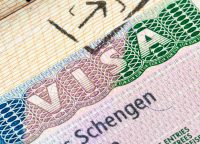
Student visa for Spain

Spain is one of Europe’s leading educational hubs. It is home to universities, colleges, language schools and academic exchange programmes. Third-country nationals require a national D visa for long-term study in Spain.
Upon entering the country on a Spanish student visa, the student must legally formalise their status by obtaining an Estancia por estudios. This will serve as the basis for their residence during their studies. If the duration of study exceeds 6 months, they must apply for a Foreigner’s Identity Card (TIE, Tarjeta de Identidad de Extranjero), confirming the legality of their stay in the country. Upon completion of studies, you may apply to change your immigration status and apply for a Spanish residence permit. Compliance with immigration requirements is mandatory.
Why Spain is often chosen for a traditional European education:
- international recognition of qualifications;
- a wide range of study programmes and courses;
- a Spanish student visa allows part-time work provided the conditions of the Estancia por estudios status are met;
- relatively low tuition fees;
- a student visa for Spain can be the first step on an immigration pathway aimed at obtaining a residence permit, permanent residency and citizenship;
- full integration into the European and global education landscape.
Who needs a Spanish student visa
The requirement to obtain a special visa does not apply to all prospective students. Citizens of EU/EFTA countries may exercise their right to free movement within the European Union. If the duration of their studies exceeds 90 days, they must undergo the standard registration procedure at their place of residence, as required of all foreign nationals. However, they do not need to apply for a separate student visa for Spain.
For third-country nationals (personas de países terceros), the situation is slightly more complicated. To enter Spain, you must first obtain a Type D national visa, stating that the purpose of your visit is to study on a course, at a college or at a university. Once you have been admitted to an educational institution, you will be granted Estancia por estudios status. It is this status that legally authorises your residence in the country for the entire duration of your studies. If your studies last longer than 6 months, a TIE is issued; an NIE is usually granted at the same time or separately if necessary.
How to obtain a student visa for Spain
A residence permit is not issued automatically. You must confirm that you meet the basic requirements and demonstrate that you genuinely wish to study in the country. A student visa for Spain is subject to restrictions regarding the right to work and/or run a business, and combining both statuses without meeting the basic requirements may be considered a breach of visa regulations.
Basic requirements:
- proof of enrolment at an accredited educational institution authorised to accept international students;
- sufficient funds to cover basic living costs for food, transport and accommodation without the need for employment or state support — at least 100% of the IPREM (Public Multiple Effect Income Indicator), which is approximately €600–€650 per month;
- health insurance for the entire duration of the course;
- no serious criminal offences;
- documentary evidence that the applicant for a student visa to study in Spain will indeed be studying, and that upon completion of the course they will leave the country or apply to change their immigration status.
There is no provision for extending a student visa. Once you have obtained and confirmed your status, the validity of the permit is linked to the duration of your studies. It should be noted that the Spain student visa is, in essence, a combination of a short-term national visa (category D) and Estancia por estudios status.
There are no formal age restrictions. You can become a student at 40 or 50 years of age. However, changes to immigration legislation have introduced minimum age requirements. For higher education, the minimum age is 17; for language and vocational courses, and FP (Formación Profesional, vocational training), it is 18.
For foreigners over 35, the decision to grant a student visa is based on a number of additional criteria. The main ones are the logical nature of the educational objective, the link to one’s career, motivation, and the genuine intention to study rather than using the courses as a formal means of relocation.
Documents required for a Spanish student visa
For EU/EFTA citizens, the procedure is simplified: usually a passport or ID card and proof of residence are sufficient. Studying in Spain on a student visa for third-country nationals requires the preparation of a full set of documents. Any discrepancies may lead to the refusal of a Spanish student visa or the granting of Estancia por estudios status.
Contents of the basic set of documents:
- a valid passport with sufficient validity — for at least the duration of the course;
- a completed application form for a D visa;
- proof of enrolment on a study course;
- proof of sufficient financial means;
- health insurance;
- a certificate of no criminal record;
- proof of a permanent address in Spain — a tenancy or property purchase agreement, an invitation from a relative, etc.;
- in some cases — a medical certificate.
When applying for a D visa and/or Estancia por estudios status, you may be asked to provide additional documents, but this is generally the exception rather than the rule.
Procedural details
Generally speaking, obtaining a student visa for Spain involves two stages. The first requires a visit to the consulate or embassy in your country of residence. The final stage is obtaining Estancia por estudios status. In any case, you should prepare for the procedure, as this will significantly reduce the risk of your application being refused.
How to obtain a visa to study in Spain:
- Choosing a college/university and a specific course. To obtain a national D-type visa, you must submit confirmation from an accredited educational institution to the consulate or embassy.
- Preparing the application documents. It is best to check the exact requirements immediately before submitting your application, as immigration rules may change.
- Submitting the application. The standard option is the consulate, but an authorised visa centre is also acceptable. In most cases, a personal visit will be required; remote applications are not accepted. During your visit, you will be asked to provide biometric data – fingerprints – if this has not already been done.
- Application processing. Your application will be thoroughly reviewed. You may be asked to provide additional documents. If the decision is positive, you will be issued with a Type D national visa. It is valid for a maximum of 90 days.
- Obtaining student status. With a D visa, you may enter Spain. You will have 30 days to apply for Estancia por estudios status, which will legalise your stay in the country for the entire duration of your studies.
The standard processing time for an application is between 15 and 45 calendar days, calculated from the date the complete set of documents is submitted. Delays are possible if consular or visa centre staff are particularly busy, but this is rather rare. If additional documents are requested or further checks are required, the processing time is extended. It is therefore advisable to start the procedure 1–2 months before the start of your studies.
Working whilst studying
The country’s legislation regulates student employment but does not rule out the possibility of paid work. Current restrictions apply to the type of work, and compliance with the conditions for obtaining a Spanish student visa is monitored. Any breaches of the regulations may result in the revocation of Estancia por estudios status.
Can you work whilst studying in Spain:
- work must not interfere with your studies;
- there is a limit of no more than 30 hours per week; full-time work is permitted only during holidays;
- the minimum wage is between €8 and €12 per hour, which amounts to between €600 and €1,000 per month, calculated based on rates set by the SMI (Salario Mínimo Interprofesional);
- typical part-time job options include the service sector, administrative roles and work placements in your field of study.
Once your studies have been completed, you may extend your Estancia por estudios for up to 12 months if you wish to look for work or apply for a different immigration status. You can apply to change the basis of your stay in the country. For example, to run a business or work, provided that the standard eligibility criteria are met ( ). Once your application has been approved, the restrictions on working hours will be lifted.
How much money is needed for a student visa
Budget requirements should be based on three components. The first is the cost of applying for a national D visa and the administrative fees for obtaining Estancia por estudios status. The second is the cost of the course itself. The third is the cost of living in Spain: food, communications, accommodation, transport, basic services, etc.
Cost of applying for a student visa to Spain:
- consular fee — €60–€100; if applying via a visa centre — an additional €15–€30;
- health insurance — €30–€80 per month;
- proof of sufficient funds to cover living costs; the specific amount is determined based on the IPREM;
- additional administrative costs — €50–€200+, covering document translations, apostilles and certificates.
The cost of the course depends on the specific educational institution. Annual fees at state colleges/universities range from €1,000 to €6,000, and at private institutions from €6,000 to €20,000. However, at some institutions, prices may be significantly higher. Living costs depend heavily on your desired lifestyle; this varies greatly from person to person. A rough estimate is between €700 and €1,200 per month. This basic amount covers accommodation, food, transport and essential personal expenses. Costs are higher in large cities, whilst you can save money in smaller towns.
To meet the requirements for a student visa to Spain, preparation is needed. Estancia por estudios status is not granted automatically; simply being accepted into a college or university will not be enough. If you want to reduce the risk of refusal and simplify the legal process, contact our specialists. We will certainly help you.
+++
FAQs about student visa for Spain
Which cities and universities are the most popular?
International students most often choose large cities — Madrid, Barcelona, Valencia — and, on a limited budget, Granada and Seville. The leading universities include the University of Barcelona, the Autonomous University of Barcelona, the Complutense University of Madrid, the Autonomous University of Madrid and the University of Valencia.
Do I need to take language proficiency exams?
It depends on the institution, but in most cases you do need to prove your language proficiency. If the course is taught in Spanish, you’ll often need to provide DELE or SIELE certificates, with a minimum level of B1–B2. If the programme is in English, then IELTS or TOEFL
Can I work immediately upon arrival?
Yes, but with restrictions and only after obtaining Estancia por estudios status. This allows students to work part-time — no more than 30 hours a week, and the work must not interfere with their studies. During holidays, this restriction is lifted. Full-time work is only possible after changing your immigration status.